Introduction
Medical centres operating under the Gulf Approved Medical Centres Association (now widely known as WAFID) must comply with stringent accreditation standards before being authorised to conduct medical examinations for GCC visa applicants. These standards are established under the regulatory framework of the Health Ministers’ Council for GCC States and are designed to ensure accuracy, consistency, and integrity in medical screening processes.
Legal Basis for Accreditation
Accreditation criteria for medical centres are derived from:
- Resolutions issued by the Health Ministers’ Council for GCC States
- Unified GAMCA/WAFID medical examination regulations
- Oversight policies implemented by the Gulf Health Council
Once approved, these standards become legally binding, and only accredited centres are permitted to perform official medical tests for GCC visa processing.
Mandatory Equipment Requirements
To maintain consistency and diagnostic accuracy, medical centres must be equipped with standardised medical equipment and infrastructure.
Essential Equipment Includes:
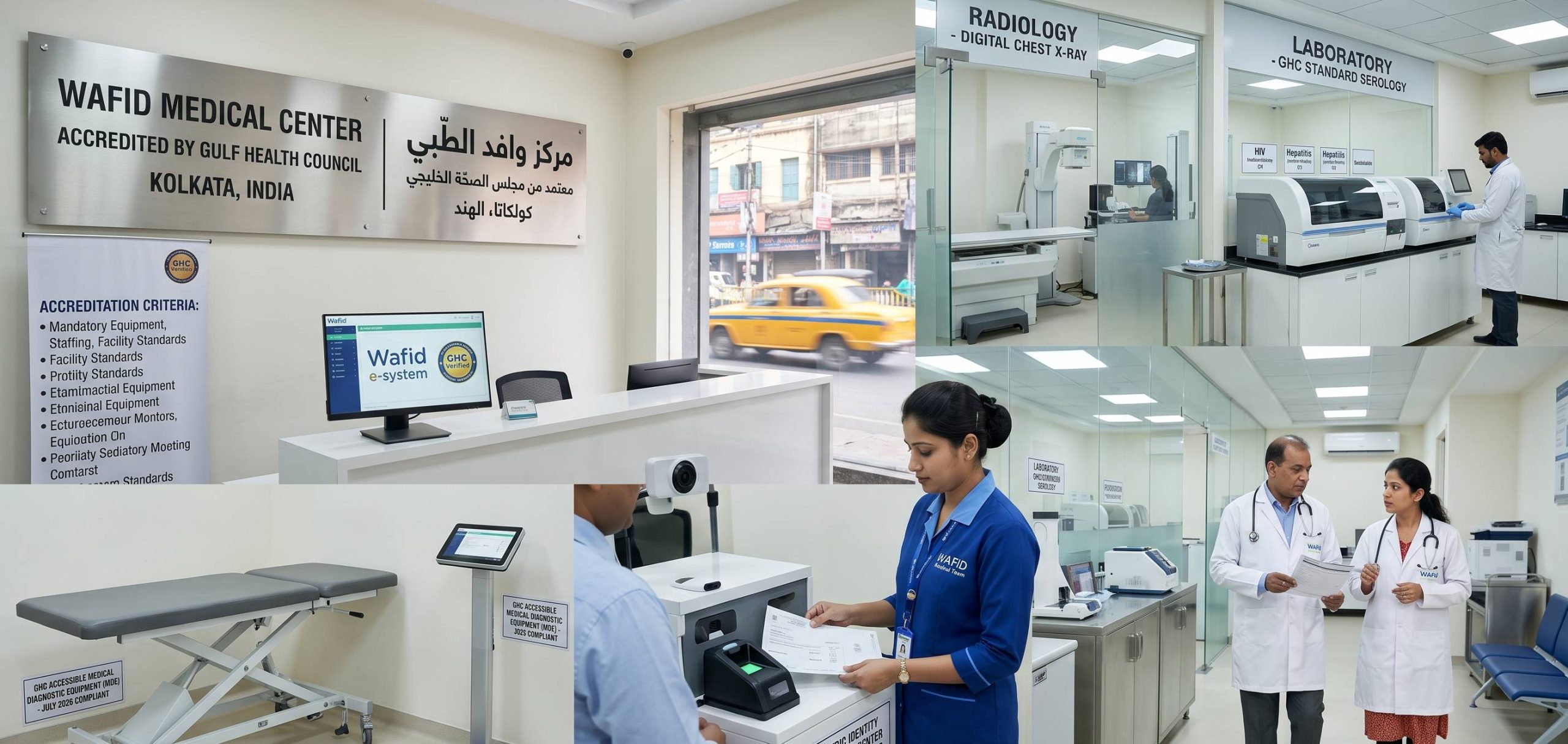
- Digital X-ray machines for tuberculosis detection
- Laboratory analysers for blood testing (HIV, Hepatitis B & C)
- Sterilisation equipment to maintain hygiene standards
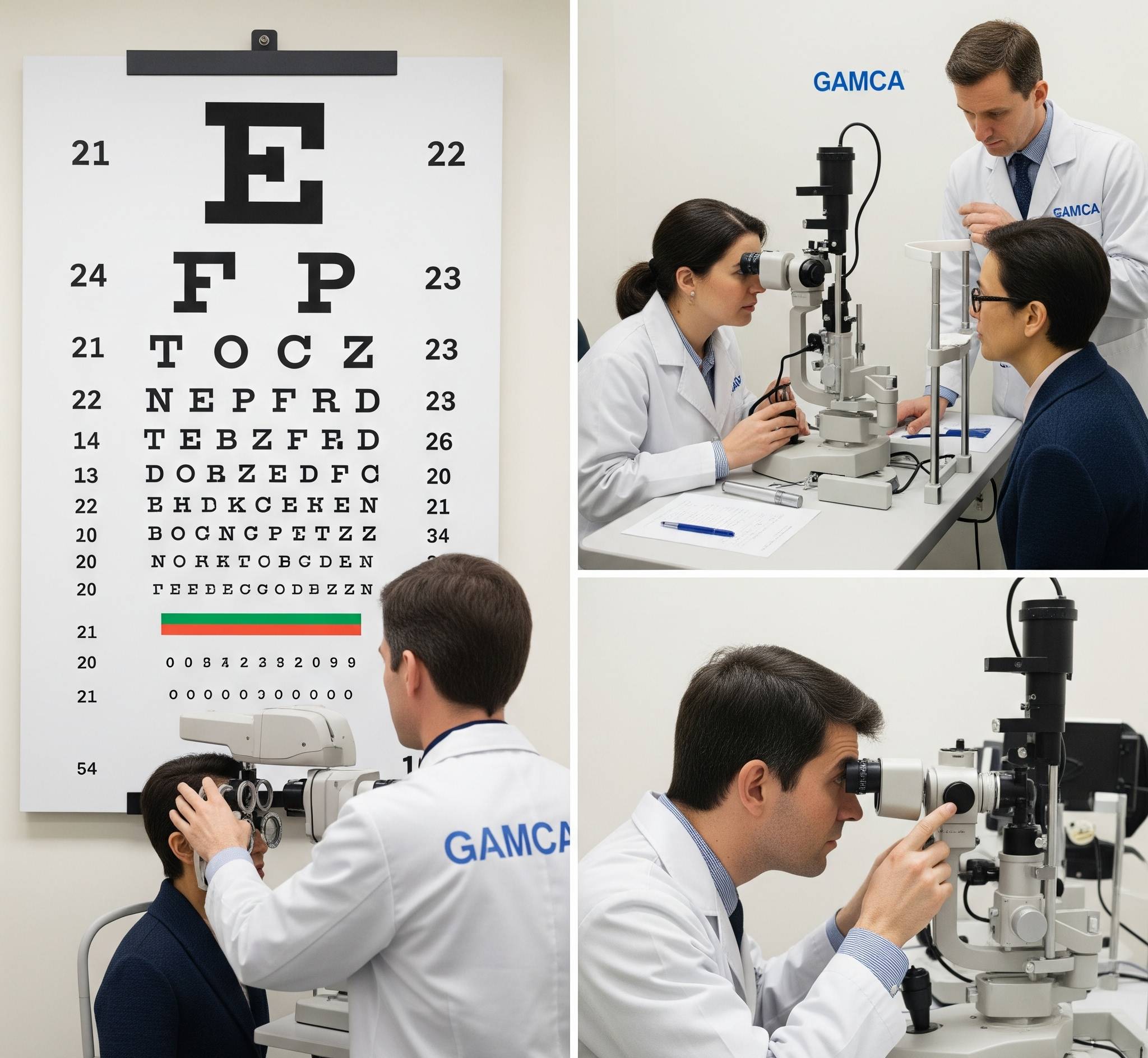
- Diagnostic tools for physical examinations
All equipment must meet approved technical specifications and undergo regular calibration to ensure reliability and compliance.
Laboratory Standards and Testing Capabilities
Accredited centres must have fully functional laboratories capable of conducting:
- Serological tests (HIV, Hepatitis)
- Haematology and biochemistry tests
- Urine and stool analysis
Laboratories are required to follow international quality standards, ensuring accurate and reproducible results across all GCC-approved centers.
Staffing Requirements and Professional Qualifications
Qualified medical personnel are a critical component of accreditation. Centres must employ:
- Licensed physicians with relevant clinical experience
- Certified laboratory technicians
- Radiologists trained in interpreting chest X-rays
- Support staff for patient handling and administration
All staff must hold valid certifications and comply with professional licensing requirements in their respective countries.
Facility and Infrastructure Standards
Medical centers must meet strict facility requirements to ensure safety, hygiene, and efficiency.
Key Facility Standards:
- Separate areas for registration, examination, and testing
- Proper ventilation and sanitation systems
- Adequate waiting areas for applicants
- Secure storage for medical records and samples
The facility must be designed to handle high volumes of applicants while maintaining privacy and infection control protocols.
Digital Integration and Reporting Systems
Modern GAMCA/WAFID accreditation requires full digital integration. Medical centres must:
- Upload test results directly to centralised systems
- Use approved software for report generation.
- Ensure secure data transmission to GCC embassies.
This digital framework minimizes fraud, improves transparency, and allows real-time verification of medical reports.
Quality Control and Audit Mechanisms
To maintain accreditation, centres are subject to continuous monitoring, including:
- Periodic inspections by regulatory authorities
- Random audits of medical reports
- Verification of compliance with testing protocols
Non-compliance may result in penalties such as suspension or blacklisting from the Gulf Approved Medical Centres Association network.
Ethical and Legal Compliance
Accredited centres must adhere to strict ethical guidelines, including:
- Maintaining patient confidentiality
- Ensuring unbiased medical evaluations
- Avoiding fraudulent or manipulated results
Legal accountability is a key aspect, as any violation can lead to severe regulatory action.
Challenges in Meeting Accreditation Standards
Medical centres may face several challenges, such as:
- High costs of advanced equipment and maintenance
- Need for continuous staff training.
- Compliance with evolving regulations
- Integration with digital systems
Despite these challenges, adherence to standards is essential for maintaining credibility and authorisation.
Conclusion
Accreditation under the Gulf Approved Medical Centers Association framework ensures that medical centers meet rigorous standards in equipment, staffing, and facilities. Guided by the Health Ministers’ Council for GCC States, these requirements create a uniform, transparent, and reliable medical screening system across GCC countries.
By enforcing strict accreditation criteria, the system safeguards public health, maintains consistency in medical evaluations, and upholds the integrity of the GCC immigration process.