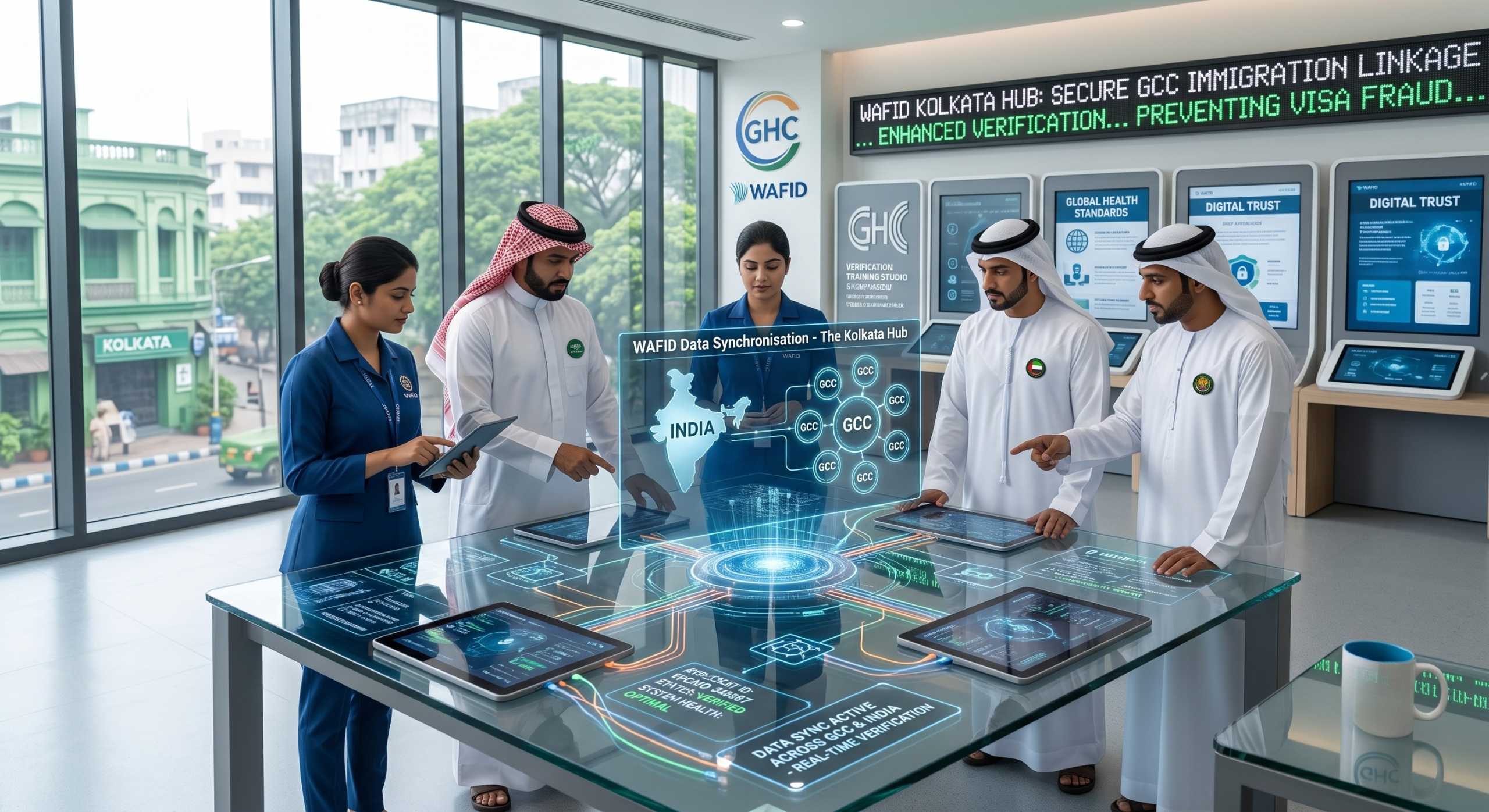
The WAFID platform plays a vital role in managing medical examinations for individuals planning to work or reside in Gulf Cooperation Council (GCC) countries. Beyond appointment booking and medical report generation, the system helps ensure that verified medical information is available for the visa application process. Data synchronisation between WAFID and GCC immigration systems enables authorised authorities to access consistent medical records, reducing manual verification and supporting a smoother immigration process.
What Is Data Synchronisation?
Data synchronisation is the process of keeping information consistent across different digital systems. In the context of WAFID, it involves securely updating and maintaining medical examination records so that relevant authorities can verify an applicant’s medical status during visa processing. This reduces the need for repeated document submissions and helps ensure that the latest verified information is available when required.
How WAFID Supports the GCC Visa Process
WAFID acts as a centralised platform for registering applicants, scheduling medical examinations, recording test results, and maintaining medical reports. Approved medical centres upload examination data through standardised procedures, creating a reliable digital record. This structured approach helps support the visa process by providing consistent and verifiable medical information for authorized use.
Importance of Accurate Data Synchronisation
Accurate data synchronisation helps ensure that applicant information remains consistent throughout the medical and immigration process. Details such as the applicant’s name, passport number, nationality, date of birth, and medical examination status should match official records. Maintaining accurate information reduces administrative errors and minimises delays caused by mismatched documents.
Standardised Digital Medical Records
One of the strengths of the WAFID system is its use of standardised digital medical records. Medical examination results are recorded electronically by approved medical centres, reducing reliance on paper-based documentation. Digital records improve consistency, simplify verification, and help maintain the integrity of applicant information throughout the process.
Benefits for Immigration Authorities
Reliable data synchronisation allows immigration authorities to verify medical examination information more efficiently. Instead of relying solely on physical documents, authorised personnel can use standardised digital records to support the visa assessment process. This approach helps improve operational efficiency while reducing the possibility of errors associated with manual document handling.
Reducing Administrative Delays
When applicant information is consistent across systems, visa applications can proceed with fewer interruptions. Accurate synchronisation reduces the need for repeated verification requests, document corrections, and manual data entry. As a result, applicants may experience a smoother processing journey, provided all submitted information is accurate and complete.
Supporting Data Accuracy
Maintaining accurate records is essential for successful data synchronisation. Approved medical centres are responsible for verifying applicant identity before conducting examinations and recording information according to established procedures. Applicants also play an important role by providing correct passport details and reviewing their information carefully during registration.
Security and Confidentiality of Medical Information
Medical records contain sensitive personal information that requires appropriate protection. The WAFID platform follows established digital processes for managing applicant data and limiting access to authorised users. Secure handling of medical information helps maintain confidentiality while supporting legitimate verification during the visa application process.
Role of Approved Medical Centres
Approved medical centres serve as the primary source of medical examination data within the WAFID system. They verify applicant identity, conduct the required examinations, and upload medical results according to standardised guidelines. Their adherence to established procedures helps ensure that the information recorded in the system is accurate and suitable for verification.
Common Challenges in Data Synchronisation
Although digital systems improve efficiency, occasional challenges can occur. Temporary processing delays, incorrect passport details entered during registration, incomplete applicant information, or data entry mistakes may affect record consistency. Most issues can be resolved through verification and correction procedures before they significantly impact the visa application process.
Best Practices for Applicants
Applicants can help ensure successful data synchronisation by using accurate passport information during registration, attending only approved medical centres, reviewing appointment details carefully, and checking their medical report after it becomes available. Promptly reporting any discrepancies can help prevent delays during visa processing.
Future of Digital Integration in GCC Medical Screening
Digital technologies continue to improve the efficiency of medical screening and immigration procedures across GCC countries. As electronic systems evolve, greater integration between medical examination platforms and immigration processes is expected to enhance data accuracy, strengthen security, and streamline verification while maintaining compliance with applicable regulations.
Conclusion
Data synchronisation between WAFID and GCC immigration systems plays an important role in creating an efficient and reliable medical verification process. By maintaining standardized digital records, supporting accurate identity verification, and reducing manual document handling, the system helps streamline visa processing while improving data consistency. Applicants who provide accurate information and follow official WAFID procedures can help ensure that their medical records are correctly maintained and available for the necessary verification stages of their GCC visa application.
Frequently Asked Questions
What is data synchronisation in the WAFID system?
Data synchronisation is the process of maintaining consistent medical examination information across digital systems so that authorised authorities can verify applicant records during the visa process.
Why is accurate information important in WAFID?
Accurate personal and medical information helps prevent verification issues, reduces administrative delays, and supports efficient visa processing.
Who uploads medical examination data to WAFID?
Approved medical centres upload examination results after completing the required medical screening and identity verification procedures.
Can incorrect passport details affect data synchronisation?
Yes. Incorrect passport numbers or personal information may result in mismatched records and could delay verification until the information is corrected.
How can applicants help ensure accurate synchronisation?
Applicants should provide correct passport details, attend approved medical centres, verify their information during registration, and review their medical report once it is available.