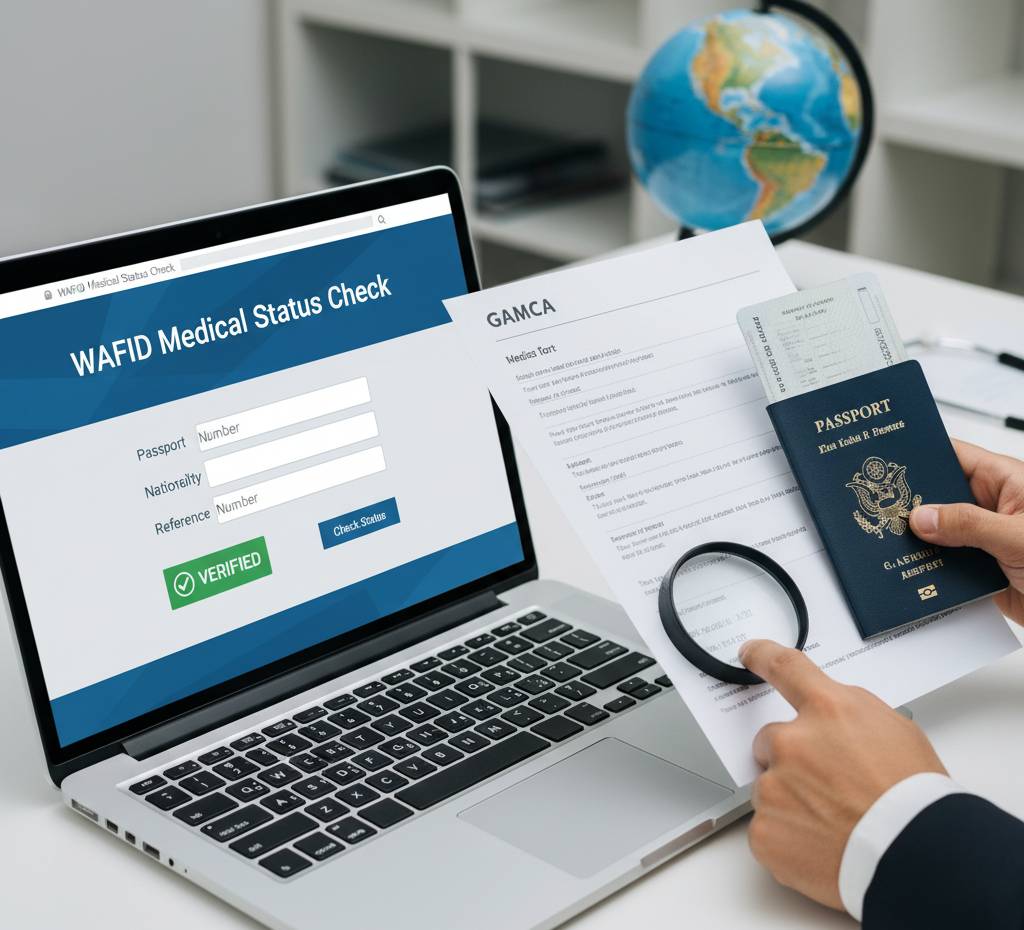

The Sixth Version (2021) of the Regulations of Medical Examination of Expatriates Coming to GCC States for Work or Residence represents the current unified legal and operational framework for pre-departure health screening of expatriates (now operated through the WAFID/Expatriates Check-up Program, formerly known as GAMCA). This version was formally approved by the GCC Health Ministers through a dedicated resolution, making it binding across all GCC member states.
The Approving GCC Health Ministers’ Resolution
The regulations derive their legal authority directly from Resolution No. (4) of the eighty-fourth meeting of the Health Ministers of the Gulf Cooperation Council countries (in its forty-sixth session). This resolution explicitly grants approval to “the rules and regulations and their updated annexes for the medical examination of expatriates … sixth version 1443 AH corresponding to 2021.”
This resolution:
- Establishes the regulations as the official, mandatory standard for all expatriate medical examinations conducted outside the GCC.
- Mandates the use of a centralised electronic system (e-system) linking GCC authorities, embassies/consulates, health ministries, and accredited centres.
- Requires implementation by all relevant GCC bodies, including the Gulf Health Council and its Executive Board.
- Supersedes all previous versions of the rules.
The resolution forms the highest-level legal instrument, issued by the collective GCC Health Ministers’ Council, which oversees the Gulf Health Council (established in 1976 to promote regional health cooperation).
Overall Legal Framework
The Sixth Version creates a comprehensive, hierarchical governance structure designed to ensure standardised, transparent, and enforceable health screening. It balances public health protection (preventing entry of communicable or other specified diseases) with operational fairness through defined roles, accreditation processes, appeals, confidentiality, and penalties.
Core Governance Bodies and Their Legal Roles (as defined in the regulations):
- GCC Health Ministers’ Council: Highest authority; approves regulations, fees, and major amendments.
- Gulf Health Council (The Council): Central implementing body. It determines health conditions for entry, accredits/revokes medical centres, manages the e-system, collects fees, applies penalties, and updates procedures.
- Executive Board: Reviews recommendations from committees and adopts technical procedures and resolutions related to the program.
- Central Committee: Sets the specific medical tests, fitness/unfitness criteria, preventive measures, and accreditation standards.
- Technical Committees: Conduct evaluations, unannounced inspections, and recommend penalties or accreditation decisions.
- GCC Health Ministries & Embassies/Consulates: Handle post-arrival verification, reporting of unfit cases, document authentication, and enforcement.
- Accredited Health Centres: Authorised private facilities that must strictly follow standardised protocols, use the e-system exclusively, and issue fitness certificates within defined timelines.
This framework ensures a unified application across all GCC states while allowing centralized oversight from the Gulf Health Council. All operations are digitalised via the e-system, eliminating manual processes and enabling real-time verification by embassies and ministries.
Structure of the Sixth Version Regulations
The document (79 pages including annexes) is organised into 14 chapters plus detailed annexes:
| 1 | Definitions (key terms such as “Expatriates Check-up Program,” “Accredited Centers,” “E-System,” etc.) |
| 2 | Gulf Health Council’s mission and objectives for the program |
| 3 | Powers and responsibilities of the Gulf Health Council |
| 4 | Executive Board |
| 5 | Embassies and Consulates of GCC States |
| 6 | Health Ministries |
| 7 | Central Committee |
| 8 | Technical Committees |
| 9 | Accredited Health Centers (operational duties) |
| 10 | Accreditation and evaluation of new centers |
| 11 | Complaints and appeals |
| 12 | Confidentiality of information |
| 13 | Code of conduct and work ethics |
| 14 | Final provisions (validity, violations, fees, amendments, entry into force) |
Key Annexes (updated in the Sixth Version) include:
- Medical examination forms and components.
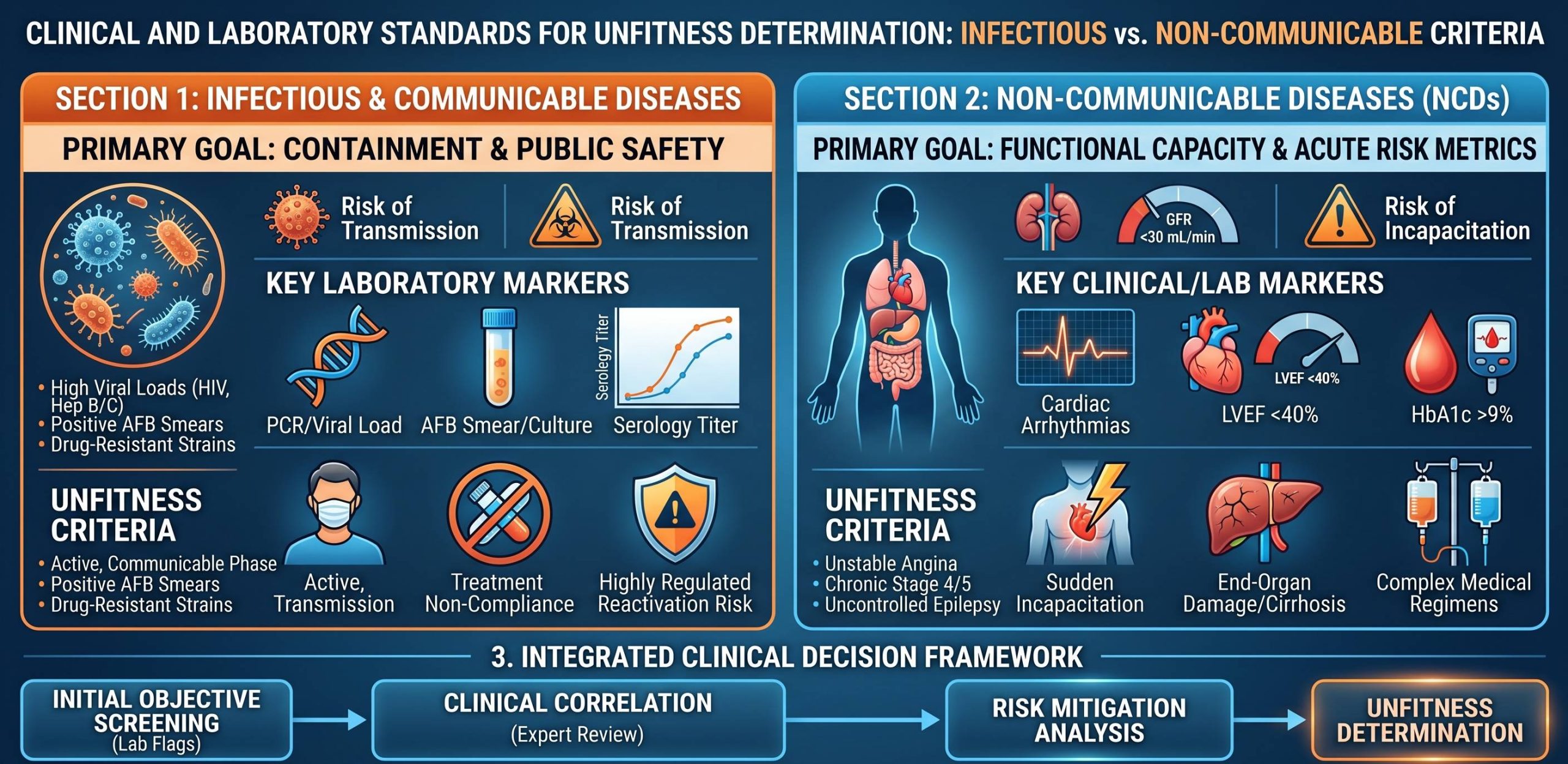
- List of medical unfitness cases (covering infectious diseases and other conditions relevant to re-medical eligibility).
- Accreditation criteria and evaluation forms.
- Complaint handling mechanism.
- Financial rules and fee schedule.
Analysis of the Sixth Version (2021)
- Strengthened Digital Integration and Standardisation: The version emphasises the mandatory e-system for token generation, appointment booking, result submission, and verification. This reduces fraud, speeds up visa processing, and creates a single source of truth for all stakeholders.
- Enhanced Accountability and Oversight:
-
- Unannounced inspections and technical evaluations are formalised.
- Clear penalties, suspension of e-system access, and revocation of accreditation for non-compliance.
- Detailed code of conduct prohibits conflicts of interest and ensures ethical behaviour.
- Robust Appeals and Complaint Mechanisms: Centres and applicants have defined pathways to submit complaints or appeals, with final decisions resting with the Gulf Health Council. This adds fairness to the process.
- Focus on Confidentiality and Data Protection: Strict rules require international-standard privacy measures, access controls, and staff training — critical for handling sensitive health data.
- Financial Transparency: Fees for accreditation, renewal, evaluations, and services are set centrally and detailed in annexes. Non-payment can result in suspension.
- Relevance to Infectious Disease Recovery and Re-Medical: The annex on “Medical Unfitness Cases” and provisions for post-arrival checks (within two months) directly support earlier discussions on eligibility rules. The regulations allow for standardised re-examination processes after treatment, with results uploaded via the e-system. Fitness certificates are valid for a fixed period (typically two months), reinforcing timely compliance.
- Implementation and Binding Nature: The Sixth Version entered into force immediately upon ministerial approval. It applies to all expatriates above a certain age seeking work or residence and remains the operative framework (with ongoing updates handled through the same ministerial resolution process).
Practical Implications
For travel agents, visa consultants, and manpower recruiters, this legal structure means:
- All medical facilitation must route through officially accredited centers and the e-system.
- Claims of “fast-track” or unofficial services risk violating the regulations.
- Understanding the unfitness criteria and appeal processes (from the annexes) allows better client guidance on re-medical cases.
The Sixth Version reflects the GCC’s commitment to a modern, harmonized, and enforceable public health safeguard while maintaining centralized control through the Health Ministers’ Council. It remains the authoritative document; any future updates would require a new ministerial resolution.
For the complete official text, refer directly to the regulations PDF available on the WAFID portal. If you need a deeper dive into specific articles (e.g., unfitness criteria, accreditation requirements, or fee schedules) or comparison with prior versions, provide additional details for further analysis. Always ensure compliance with the latest GCC Health Council guidance for operational use.