The Gulf Health Council (GHC) plays a central role in regulating the WAFID medical system, which is the standardized health screening program for individuals seeking employment or residence in Gulf Cooperation Council (GCC) countries. The Council develops unified medical regulations, supervises approved medical centers, and ensures that medical examinations are conducted according to consistent health standards across participating countries. Through the WAFID program, the Gulf Health Council helps protect public health while maintaining a transparent and reliable medical screening process for expatriates.
What Is the Gulf Health Council?
The Gulf Health Council is a regional organisation established to strengthen healthcare cooperation among GCC member states. One of its major responsibilities is overseeing the WAFID program, formerly known as the GAMCA medical system. The Council works with health authorities in GCC countries to create standardised medical examination procedures, update health regulations, and improve the efficiency of expatriate medical screening.
Understanding the WAFID Medical System
The WAFID medical system is an electronic platform used to manage pre-employment and residency medical examinations for expatriates travelling to GCC countries. Applicants book appointments through the platform, attend examinations at assigned approved medical centers, and receive their medical results through the same system. The Gulf Health Council supervises the program to ensure consistency, fairness, and compliance with approved medical standards.
Establishing Uniform Medical Standards
One of the Gulf Health Council’s primary responsibilities is creating unified medical guidelines that are followed by approved medical centers. These standards define the required medical examinations, laboratory investigations, radiological assessments, and reporting procedures. By maintaining consistent medical requirements, the Council helps ensure that applicants are evaluated fairly regardless of where they complete their examination.
Accreditation of WAFID Medical Centres
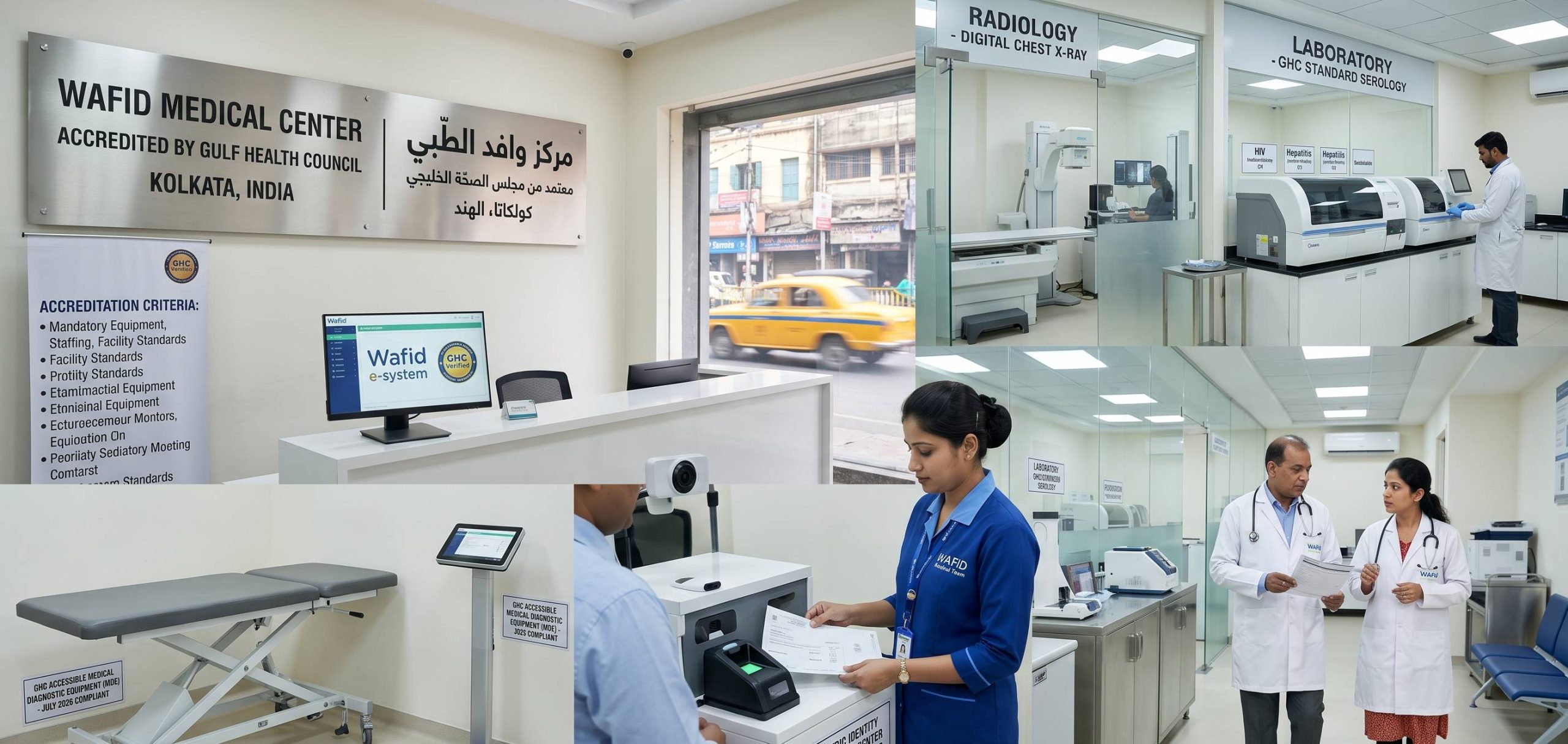
The Gulf Health Council is responsible for accrediting medical centres that participate in the WAFID program. Only centres that meet the Council’s operational, technical, and quality requirements are authorised to conduct WAFID medical examinations. Regular evaluations and inspections help ensure that these facilities continue to meet the required standards for equipment, staff qualifications, and reporting accuracy.
Monitoring Compliance and Quality
Maintaining quality across hundreds of approved medical centres requires continuous oversight. The Gulf Health Council conducts operational reviews, technical evaluations, and compliance monitoring to ensure that approved facilities follow established medical protocols. This supervision helps maintain the integrity of medical examinations and improves confidence in the WAFID system among applicants and GCC authorities.
Digital Management Through the WAFID Platform
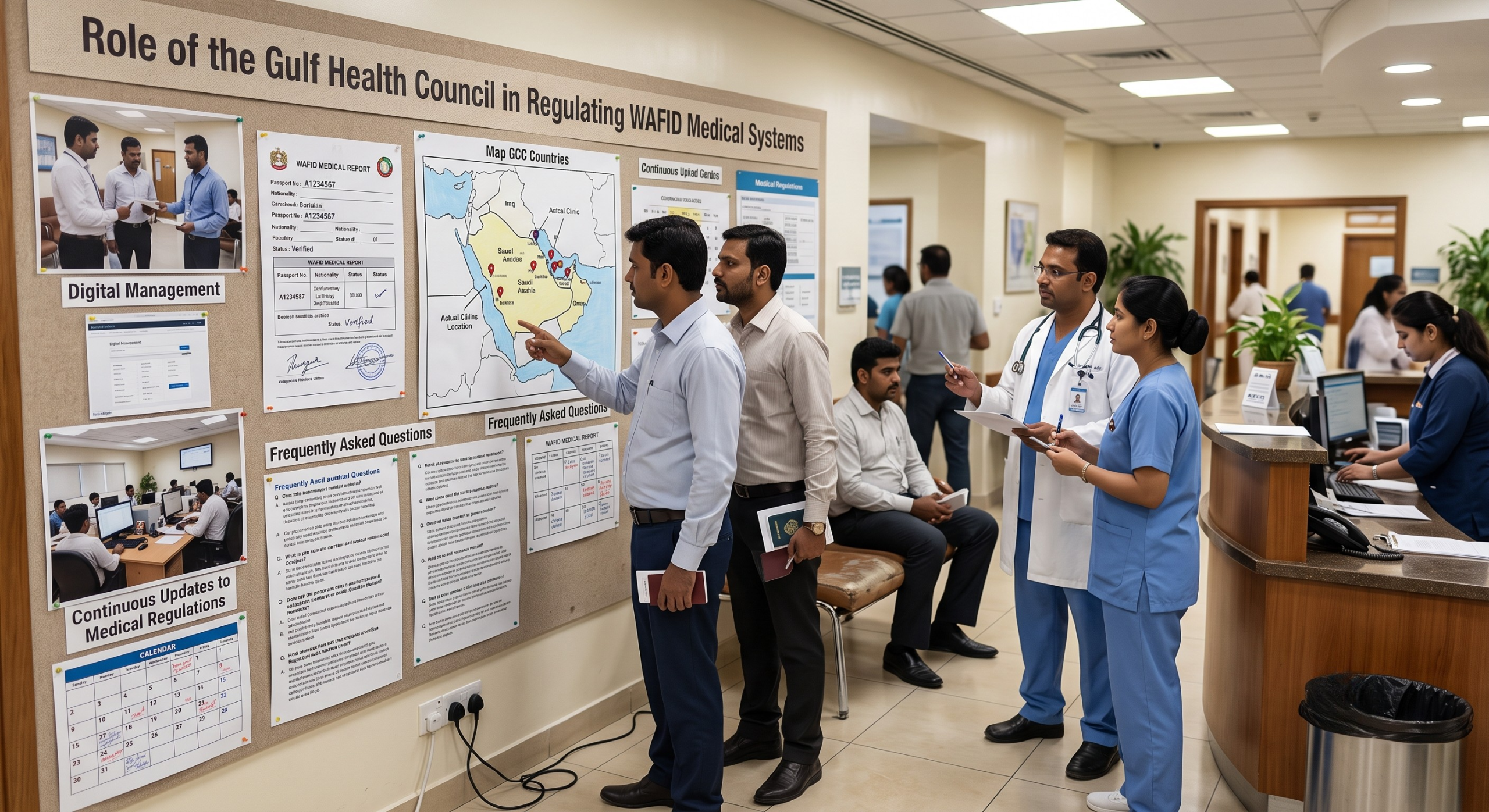
The WAFID platform simplifies appointment booking, medical report management, and communication between approved medical centres and GCC authorities. The Gulf Health Council continuously improves the electronic system to enhance efficiency, strengthen data security, and reduce administrative delays. Digital processing also minimises manual errors and supports standardised reporting across participating countries.
Protecting Public Health Across GCC Countries
A major objective of the Gulf Health Council is protecting public health within GCC member states. The standardized medical examination program helps identify communicable diseases and other health conditions according to approved medical regulations before expatriates travel. This coordinated approach supports disease prevention while ensuring that medical screening remains consistent across all participating countries.
Continuous Updates to Medical Regulations
Healthcare standards continue to evolve as medical knowledge and public health priorities change. The Gulf Health Council periodically reviews and updates WAFID regulations, medical examination requirements, and operational procedures to improve the effectiveness of the program. These updates help ensure that the WAFID system remains aligned with current healthcare practices and GCC public health objectives.
Benefits of Gulf Health Council Regulation
The regulatory framework established by the Gulf Health Council offers several advantages for applicants and GCC countries. Standardised procedures improve fairness, accredited medical centres maintain consistent service quality, electronic processing reduces delays, and centralised oversight enhances the reliability of medical reports. These measures contribute to a smoother visa application process while supporting regional public health goals.
How Applicants Benefit from a Regulated WAFID System
Applicants benefit from a structured medical examination process with clearly defined procedures and standardised reporting. Since approved medical centers follow the same guidelines established by the Gulf Health Council, applicants receive consistent medical evaluations regardless of the country where the examination takes place. The centralised electronic system also provides greater transparency during appointment booking and report processing.
Conclusion
The Gulf Health Council serves as the regulatory authority behind the WAFID medical system, ensuring that medical examinations for GCC-bound expatriates are conducted according to unified standards. Through accreditation of medical centres, continuous quality monitoring, digital system management, and regular updates to medical regulations, the Council supports a transparent and efficient screening process. Its oversight strengthens public health protection while providing applicants with a consistent and reliable pathway for completing their mandatory medical examinations before traveling to GCC countries.
Frequently Asked Questions
What is the Gulf Health Council’s role in WAFID?
The Gulf Health Council supervises the WAFID program by establishing medical regulations, accrediting medical centers, monitoring compliance, and maintaining standardized health screening procedures for expatriates.
Does the Gulf Health Council approve medical centres?
Yes. Only medical centers that satisfy the Council’s accreditation requirements are authorized to conduct WAFID medical examinations.
Why are WAFID medical standards standardised?
Standardisation ensures that applicants are evaluated consistently under the same medical guidelines, regardless of the country or approved medical centre where the examination is performed.
Can the Gulf Health Council update WAFID regulations?
Yes. The Council periodically reviews and updates medical regulations and operational procedures to improve healthcare standards and strengthen the WAFID program.
Why is accreditation important in the WAFID system?
Accreditation ensures that approved medical centres meet the required quality, operational, and technical standards necessary to conduct reliable medical examinations.