Understanding GAMCA Medical Report Timelines
One of the most common questions among GCC visa applicants is why GAMCA medical reports are not issued within the same timeframe for everyone. While some applicants receive their medical fitness status within 24 to 48 hours, others may wait several days before their reports become available.
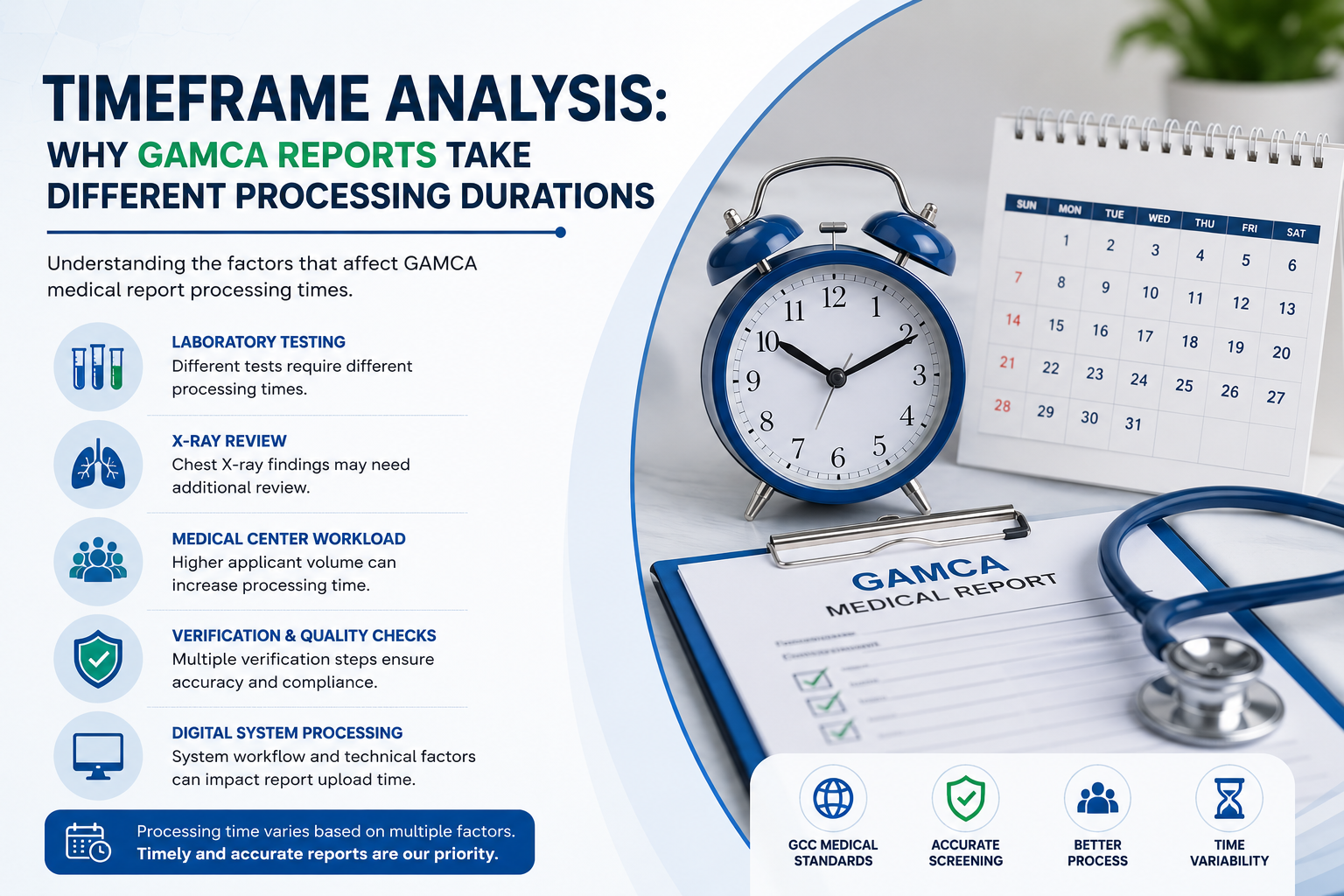
This variation often creates confusion and anxiety, especially for workers facing tight visa deadlines or employer-imposed joining dates. However, the processing time for a GAMCA medical report depends on several factors, including the destination country, the medical centre’s workload, laboratory testing requirements, report verification procedures, and any additional medical reviews.
Understanding these factors can help applicants set realistic expectations and better plan their visa application process.
The Typical GAMCA Report Processing Workflow
Before examining the reasons for delays, it is important to understand how a GAMCA medical report moves through the system.
After an applicant completes the medical examination, the process generally involves:
- Sample collection and medical examination
- Laboratory testing
- Radiology review
- Medical officer assessmentn
- Quality verification
- Digital report upload
- Final fitness determination
Each stage contributes to the overall processing timeline.
Why Some Reports Are Released Faster Than Others
Not all medical examinations require the same level of review. Applicants with straightforward results typically experience quicker processing because their reports can move through the system without additional verification.
Common characteristics of fast-processed reports include:
- Normal blood test results
- Clear chest X-rays
- No significant medical history
- No need for specialist consultation
- Complete documentation
When no abnormalities are detected, medical officers can often finalise reports quickly.
Laboratory Testing Can Influence Processing Speed
Laboratory analysis is one of the biggest factors affecting report timelines.
Several tests may be performed during the medical examination, including:
- HIV screening
- Hepatitis B testing
- Hepatitis C testing
- Syphilis screening
- Blood analysis
Some laboratory results become available relatively quickly, while others require additional processing, confirmation, or quality-control procedures.
If a test result falls outside expected ranges, laboratories may conduct repeat testing before releasing the final report. This extra step naturally increases processing time.
The Impact of Chest X-Ray Reviews
Chest radiology plays a critical role in GCC medical examinations, particularly because tuberculosis screening is a major public health requirement.
When chest X-rays show completely normal findings, radiological review is generally straightforward. However, processing may take longer if radiologists observe:
- Old TB scars
- Pulmonary fibrosis
- Calcifications
- Suspicious lung shadows
- Unclear imaging results
In such cases, additional review or secondary interpretation may be required before a fitness decision can be made.
Medical Centre Workload Matters
The number of applicants being processed at a medical centre can significantly affect report turnaround times.
During peak travel and recruitment seasons, approved centres may experience:
- Higher appointment volumes
- Increased laboratory workloads
- Longer report review queues
- Greater administrative processing demands
As a result, applicants visiting different medical centres on the same day may receive their reports at different times.
Peak Demand Periods Often Include
- Large GCC recruitment drives
- Seasonal hiring campaigns
- Construction project expansions
- Post-holiday visa processing surges
Higher demand generally translates into longer processing periods.
Country-Specific Medical Requirements
Different GCC countries may apply varying levels of scrutiny to certain medical findings.
For example:
Saudi Arabia
Medical evaluations often focus heavily on laboratory findings and infectious disease screening.
Kuwait
Chest X-ray abnormalities frequently receive closer examination, which may increase review times.
Qatar, Oman, Bahrain, and the UAE
Additional verification may occur depending on occupational category and immigration requirements.
Because each destination country has unique health regulations, processing times can vary even when applicants undergo examinations at the same medical centre.
Additional Verification and Quality Control
Medical reports are not always released immediately after laboratory testing is completed.
Most approved centres follow quality assurance procedures that may include:
- Data verification
- Identity confirmation
- Laboratory cross-checking
- Medical officer review
- System validation
These controls help reduce reporting errors and ensure compliance with GCC medical standards.
While quality checks improve accuracy, they can also extend processing times.
Cases That Usually Require Additional Review
Certain situations commonly trigger longer processing periods.
Previous Medical History
Applicants with documented health conditions may require additional evaluation before a final decision is issued.
Borderline Laboratory Results
Results that are close to medical fitness thresholds often undergo rechecking.
Unclear Radiological Findings
Chest X-rays showing unusual patterns may be reviewed by senior radiologists.
Documentation Discrepancies
Differences in passport details, registration information, or identification records can delay report release.
Digital System Processing Delays
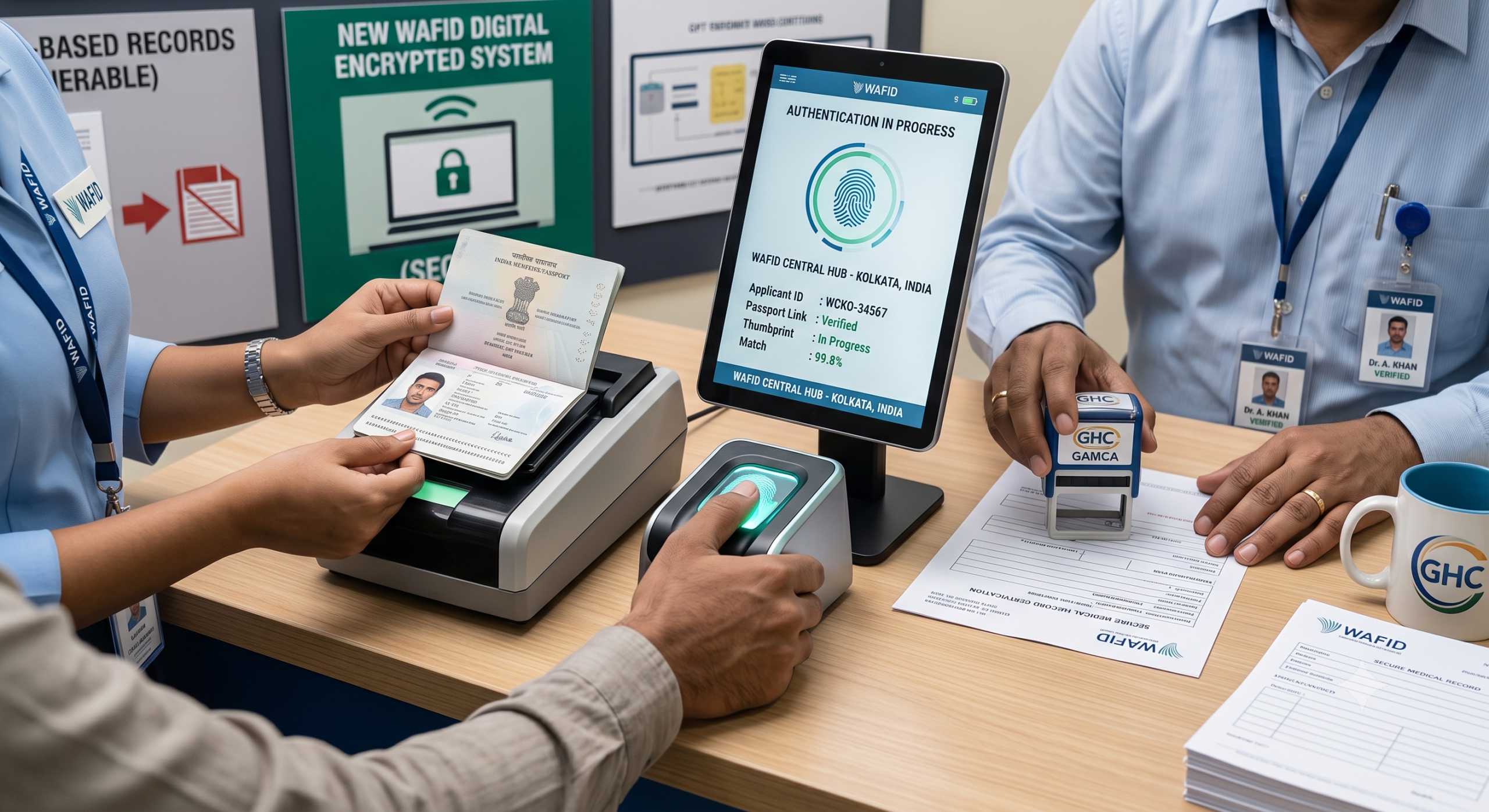
Modern GAMCA reporting systems rely heavily on electronic platforms.
Although digitalisation has significantly improved efficiency, occasional delays may occur because of:
- Server maintenance
- System synchronisation issues
- Report upload backlogs
- Network disruptions
- Verification queue congestion
These technical factors can temporarily affect processing speed even when medical evaluations have already been completed.
Why “Pending” Statuses Sometimes Last Longer
Many applicants become concerned when their report remains in a pending status for several days.
A pending status does not automatically indicate a medical problem.
Instead, it may simply mean that the report is awaiting:
- Laboratory completion
- Radiology approval
- Medical officer review
- Administrative verification
- Final system upload
In many cases, pending reports are eventually cleared without complications.
Fast-Track Expectations vs Reality
Applicants often expect instant results because appointment booking systems operate digitally. However, medical evaluations involve clinical assessments that cannot always be automated.
While some reports are completed within one or two working days, others may require:
- Three to five days
- One week
- Additional review periods in special circumstances
Processing times depend on individual findings rather than a fixed schedule.
How Applicants Can Help Avoid Delays
Although many factors are beyond an applicant’s control, several steps can help reduce potential delays.
Ensure Accurate Registration Information
Mistakes in passport details or personal information may create verification issues.
Carry Relevant Medical Records
Previous treatment records can help clarify medical findings if questions arise.
Attend the Correct Medical Centre
Always visit the assigned GAMCA-approved centre according to your appointment details.
Follow Examination Instructions
Failure to follow testing guidelines may result in repeat examinations.
Monitor Status Regularly
Checking report status periodically helps applicants stay informed without relying solely on third-party updates.
What Report Timing Can Reveal
Interestingly, report timing alone does not indicate whether an applicant will be declared fit or unfit.
Many applicants assume:
- Fast report = Fit
- Delayed report = Unfit
In reality, there is no reliable connection between processing speed and final medical status.
Delays are often administrative or procedural rather than medical.
The Future of GAMCA Report Processing
As GCC healthcare and immigration systems continue to modernise, report processing is expected to become faster and more automated.
Future developments may include:
- Enhanced digital verification
- AI-assisted report review
- Real-time laboratory integration
- Automated quality checks
- Faster database synchronisation
These improvements could reduce waiting times while maintaining high medical screening standards.
Final Thoughts
The time required to process a GAMCA medical report depends on far more than the examination itself. Laboratory testing, radiological assessments, medical reviews, quality-control procedures, destination-country requirements, and digital system workflows all contribute to the final turnaround time.
While some applicants receive their reports quickly, others may experience longer processing periods due to routine verification or additional medical review. Understanding these factors can help applicants avoid unnecessary stress and better prepare for their GCC visa journey.
Rather than focusing solely on how quickly a report is issued, applicants should prioritise accurate registration, proper documentation, and compliance with medical examination requirements to ensure the smoothest possible experience.