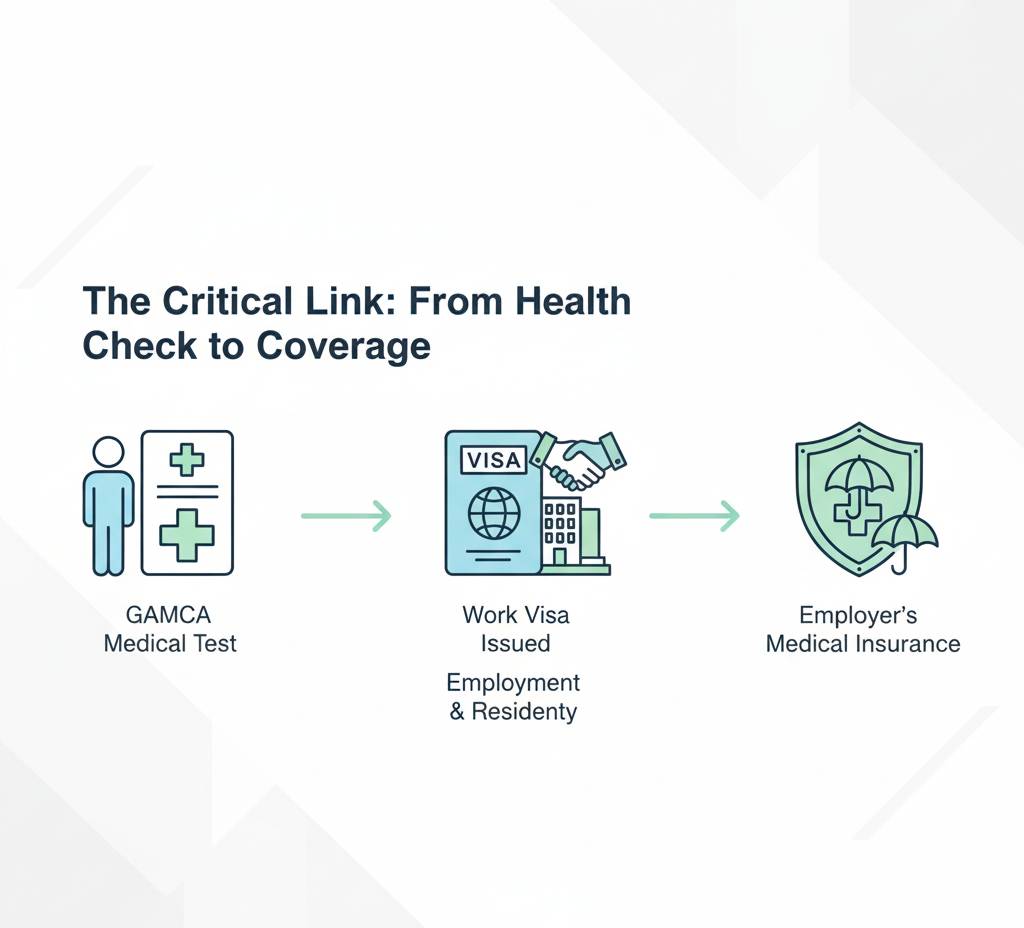
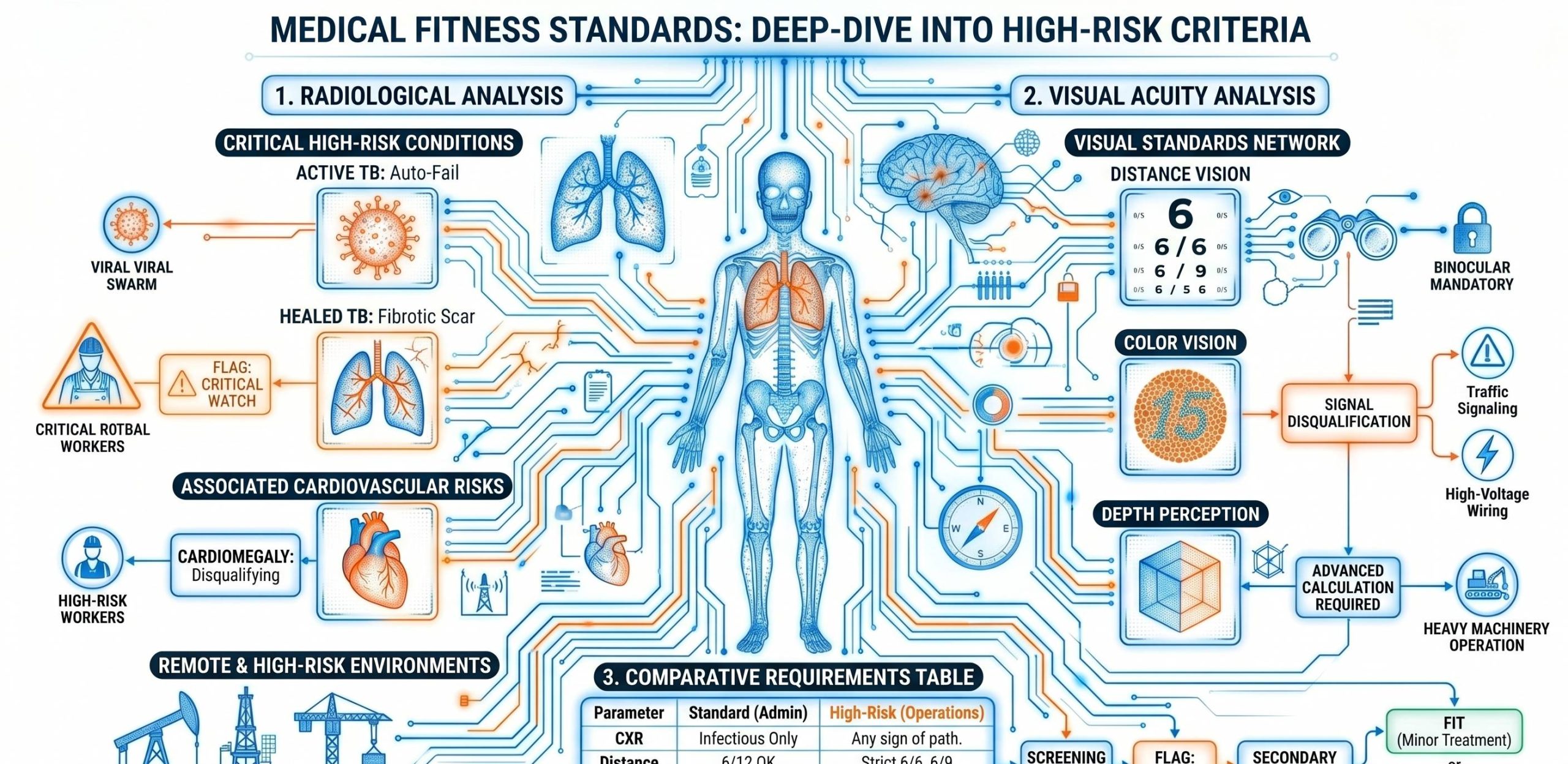
The medical examination system, formerly known as GAMCA, is mandatory for expatriates seeking employment in GCC countries such as Saudi Arabia, United Arab Emirates, Qatar, Kuwait, Oman, and Bahrain. One of the most important parts of this screening process includes radiological examinations and visual acuity testing, especially for workers applying for high-risk professions such as drivers, healthcare staff, industrial laborers, crane operators, aviation workers, and electricians.
These tests are designed to ensure that workers are medically fit to perform duties safely while also protecting public health and workplace safety.
Radiological Requirements in GAMCA
Radiological examination mainly focuses on identifying infectious and chronic lung diseases. The chest X-ray is the primary imaging test used during the medical process.
Main Purposes of Chest X-Ray
- Detect active pulmonary tuberculosis (TB)
- Identify old or healed TB scars.
- Evaluate lung fibrosis and pleural thickening.
- Detect severe chest abnormalities.
- Assess cardiomegaly and major thoracic disorders.
In most GCC medical systems, active TB is considered one of the leading causes of medical unfitness.
Important Radiological Findings
Active Tuberculosis
Applicants may be declared unfit if the chest X-ray shows:
- Cavitary lesions
- Active infiltrates
- Pleural effusion
- Progressive fibrosis
- Suspicious upper lobe abnormalities
Additional tests may include:
- Sputum AFB smear
- GeneXpert/PCR
- CT scan
- Culture testing
For healthcare workers and food handlers, even minor suspicious findings may require specialist clearance.
Old or Healed TB Scars
Some applicants have old calcified scars from previously treated tuberculosis. Depending on GCC country regulations, applicants may need:
- Repeat X-rays
- Sputum-negative reports
- Pulmonologist evaluation
- Previous treatment records
Residual scarring is evaluated carefully in high-risk professions.
Special Radiological Considerations for High-Risk Jobs
Drivers and Transport Workers
Commercial drivers and heavy vehicle operators require strong respiratory health because breathing difficulties can affect concentration and emergency response.
Possible Disqualifying Conditions
- Severe COPD
- Advanced emphysema
- Cardiomegaly
- Chronic respiratory insufficiency
Construction and Industrial Workers
Workers in construction and factories often operate in dusty and physically demanding environments.
Radiological screening helps detect:
- Pulmonary fibrosis
- Restrictive lung disease
- Occupational lung damage
- Pleural abnormalities
Those exposed to silica or asbestos may face stricter evaluation standards.
Healthcare Professionals
Healthcare workers undergo enhanced TB screening because they work closely with patients.
Additional scrutiny may involve:
- Repeat chest imaging
- Infectious disease consultation
- Latent TB assessment
- Follow-up investigations
Visual Acuity Requirements in GAMCA
Visual acuity testing ensures that workers can safely perform job-related duties. Vision standards vary depending on the profession.
Common Eye Examinations
- Distance vision testing
- Near vision assessment
- Colour vision testing
- Peripheral vision evaluation
- Eye coordination examination
Most centres use:
- Snellen charts
- Ishihara colour plates
- Torchlight examination
Visual Standards for High-Risk Professions
Drivers and Machine Operators
Drivers and heavy equipment operators require:
- Good binocular vision
- Proper depth perception
- Adequate peripheral vision
Conditions that may affect fitness:
- Severe visual impairment
- Double vision
- Significant field loss
- Monocular blindness
Electricians and Technical Workers
Color vision is extremely important for electricians and technical staff.
Color Vision Testing
Usually performed using Ishihara plates to identify:
- Red-green colour blindness
- Colour discrimination defects
Failure in colour vision testing may result in restrictions for:
- Electricians
- Aviation workers
- Marine navigation staff
- Industrial control operators
Aviation and Offshore Professions
Pilots and offshore workers generally face stricter visual standards due to the safety-sensitive nature of their work.
Requirements may include:
- Strong corrected visual acuity
- Accurate depth perception
- Stable peripheral vision
- Good night vision
Certain eye diseases can lead to unfitness:
- Glaucoma with field defects
- Retinal degeneration
- Advanced cataracts
- Retinitis pigmentosa
Corrective Lenses and LASIK Surgery
Most GCC medical systems accept applicants using:
- Prescription glasses
- Contact lenses
- LASIK or PRK corrective surgery
However, applicants must demonstrate:
- Stable postoperative vision
- No major surgical complications
- Acceptable corrected visual acuity
Some aviation-related jobs may impose waiting periods after refractive surgery.
Temporary vs Permanent Unfitness
Temporary Unfitness
Conditions that may improve after treatment include:
- Pneumonia
- Temporary chest infections
- Cataracts awaiting surgery
- Post-eye surgery recovery
- Mild abnormal chest findings
Applicants can often reapply after recovery.
Permanent Unfitness
Permanent disqualification may occur in cases such as:
- Active pulmonary TB
- Severe chronic lung disease
- Advanced visual field loss
- Total colour blindness for restricted jobs
- Severe uncontrolled eye disorders
Why These Standards Are Stricter for High-Risk Professions
High-risk occupations involve responsibilities where medical impairment can endanger:
- Public safety
- Co-workers
- Patients
- Industrial operations
- Transportation systems
Because of this, GCC authorities apply stricter radiological and visual standards for professions involving:
- Aviation
- Transportation
- Construction
- Healthcare
- Offshore drilling
- Electrical operations
Conclusion
Radiological and visual acuity examinations under the system play a major role in determining medical fitness for GCC employment. Chest X-rays help identify tuberculosis and chronic lung disease, while eye examinations ensure workers possess the vision required for safe job performance.
For high-risk professions, these standards become more detailed and occupation-specific because even minor medical limitations can significantly affect workplace safety and operational efficiency.