
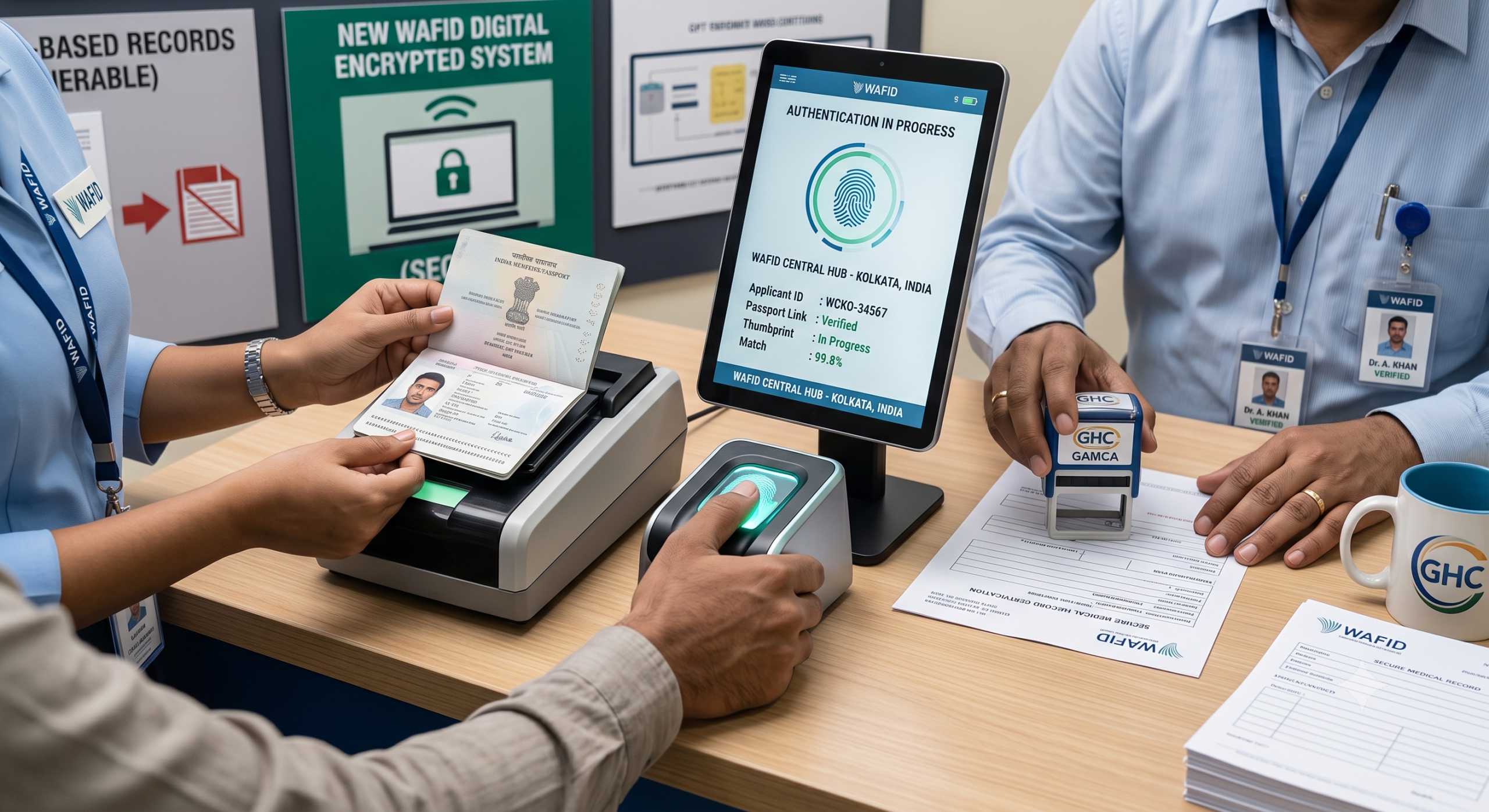
The WAFID medical system has transformed the way mandatory medical examinations are managed for individuals seeking employment or residence in Gulf Cooperation Council (GCC) countries. By centralising appointment booking, medical examinations, and report management, WAFID creates a more transparent and secure process for applicants and government authorities. One of the key advantages of this centralised system is its ability to reduce opportunities for visa fraud by ensuring that medical examinations are conducted only through approved medical centres following standardised procedures.
What Is Centralised Medical Screening?
Centralised medical screening refers to a unified system where applicant registration, appointment scheduling, medical examinations, and report processing are managed through a single digital platform. Instead of relying on separate local systems, WAFID connects approved medical centres with GCC authorities through standardised processes. This centralised approach improves consistency, enhances record management, and simplifies the verification of medical reports throughout the visa application process.
Why Visa Fraud Is a Concern
Visa fraud can occur in many forms, including the use of forged medical certificates, altered laboratory reports, fake appointment confirmations, or documents issued by unauthorized medical facilities. Such practices can compromise immigration procedures and public health measures. A centralised medical screening system helps minimise these risks by ensuring that only verified medical records from approved centres are accepted for visa processing.
Standardised Appointment Allocation
One of the strongest features of the WAFID system is its centralised appointment allocation process. Applicants are assigned to approved medical centres through the official booking platform rather than selecting unauthorised facilities. This process reduces the possibility of fraudulent bookings and ensures that every medical examination is conducted at a recognized centre that follows approved medical guidelines.
Approved Medical Centres Only
WAFID authorises only accredited medical centres to perform GCC medical examinations. These centres must meet established operational and quality standards before they are permitted to participate in the program. Restricting examinations to approved facilities helps maintain consistency in medical evaluations while reducing the risk of counterfeit medical reports entering the visa application process.
Secure Digital Medical Records
The WAFID platform maintains medical examination records electronically, reducing reliance on paper-based documentation that can be altered or duplicated. Digital records improve traceability and allow authorised authorities to verify examination results more efficiently. Electronic record management also helps minimize administrative errors while supporting a more reliable medical screening process.
Identity Verification During Registration
Applicants are required to provide accurate passport information during the registration process. Personal details entered into the WAFID system are linked to the medical examination and report, helping ensure that the records correspond to the correct individual. Identity verification reduces the likelihood of fraudulent substitutions or the misuse of another person’s medical records during visa processing.
Standardised Medical Examination Procedures
Every approved WAFID medical centre follows standardised examination protocols established for GCC medical screening. These guidelines define the required medical assessments, laboratory investigations, and reporting procedures. Consistent medical standards help ensure that applicants receive fair evaluations regardless of the country or medical centre where the examination is conducted.
Reducing Fake Medical Certificates
Before centralised systems were widely adopted, paper-based medical certificates were more vulnerable to forgery and unauthorised modifications. WAFID minimizes this risk by storing examination results within a secure digital platform that can be accessed by authorised stakeholders. Since medical reports originate directly from approved centres, opportunities for fraudulent document creation are significantly reduced.
Better Coordination with GCC Authorities
The centralised WAFID system improves communication between approved medical centres and GCC immigration and health authorities. Medical information is transmitted through standardized channels, allowing officials to verify report authenticity more efficiently. This coordinated approach strengthens the overall integrity of the visa medical screening process.
Supporting Public Health and Immigration Security
The objective of centralised medical screening extends beyond document verification. By ensuring that every applicant undergoes a standardized medical examination, WAFID supports public health initiatives across GCC countries while maintaining confidence in immigration procedures. Reliable medical records help authorities make informed decisions based on verified examination results rather than unverified documentation.
Benefits of Centralised WAFID Medical Screening
Applicants and government authorities benefit from a centralised medical screening system in several ways. The platform improves transparency, reduces administrative delays, standardises examination procedures, and strengthens document verification. It also minimizes opportunities for fraud while providing applicants with a structured and reliable medical examination process.
Best Practices for Applicants
Applicants can contribute to a secure screening process by booking appointments only through the official WAFID platform, attending approved medical centres, carrying valid identification documents, and reviewing their personal information carefully before submission. They should avoid third parties that claim to provide shortcuts or guaranteed medical approvals, as such claims may involve fraudulent activities.
Conclusion
Centralised medical screening through WAFID plays an important role in strengthening the integrity of the GCC visa medical process. By combining standardised procedures, approved medical centres, secure digital records, and identity verification, the system significantly reduces opportunities for fraud while improving transparency and efficiency. For applicants, following the official WAFID process ensures that their medical examination is recognized, properly documented, and processed according to GCC requirements, helping them move forward with their employment or residency applications confidently.
Frequently Asked Questions
How does WAFID help prevent visa fraud?
WAFID reduces visa fraud by centralising appointment booking, restricting medical examinations to approved centres, maintaining secure digital medical records, and following standardised verification procedures.
Can I use a medical report from a non-approved medical centre?
No. GCC countries generally require medical examinations to be completed only at approved WAFID medical centres recognized for the program.
Why are digital medical records important?
Digital records improve security, reduce the risk of document tampering, simplify verification, and allow authorised authorities to confirm the authenticity of medical reports.
Does WAFID verify applicant identity?
Yes. Applicants provide passport information during registration, and their medical examination records are linked to their identity to support accurate verification.
Are all applicants examined using the same standards?
Yes. Approved WAFID medical centres follow standardised medical examination guidelines to ensure consistency across participating countries.