Most parts of the GAMCA/WAFID medical are about tests and reports. Blood pressure is different: it is a number that can change with how you feel in the moment. Applicants who have never had a problem sometimes find their reading is higher than usual simply because they are nervous, rushed or short on sleep.
This guide explains why blood pressure (BP) is checked, why exam-day readings can spike, how to prepare in the weeks and hours before your appointment, and what to do if you already have hypertension.
Key takeaways
- Blood pressure is a standard part of a physical examination, so expect it to be measured.
- A single reading taken when you are anxious or hurried can be higher than your usual level. Doctors can ask you to rest and repeat it.
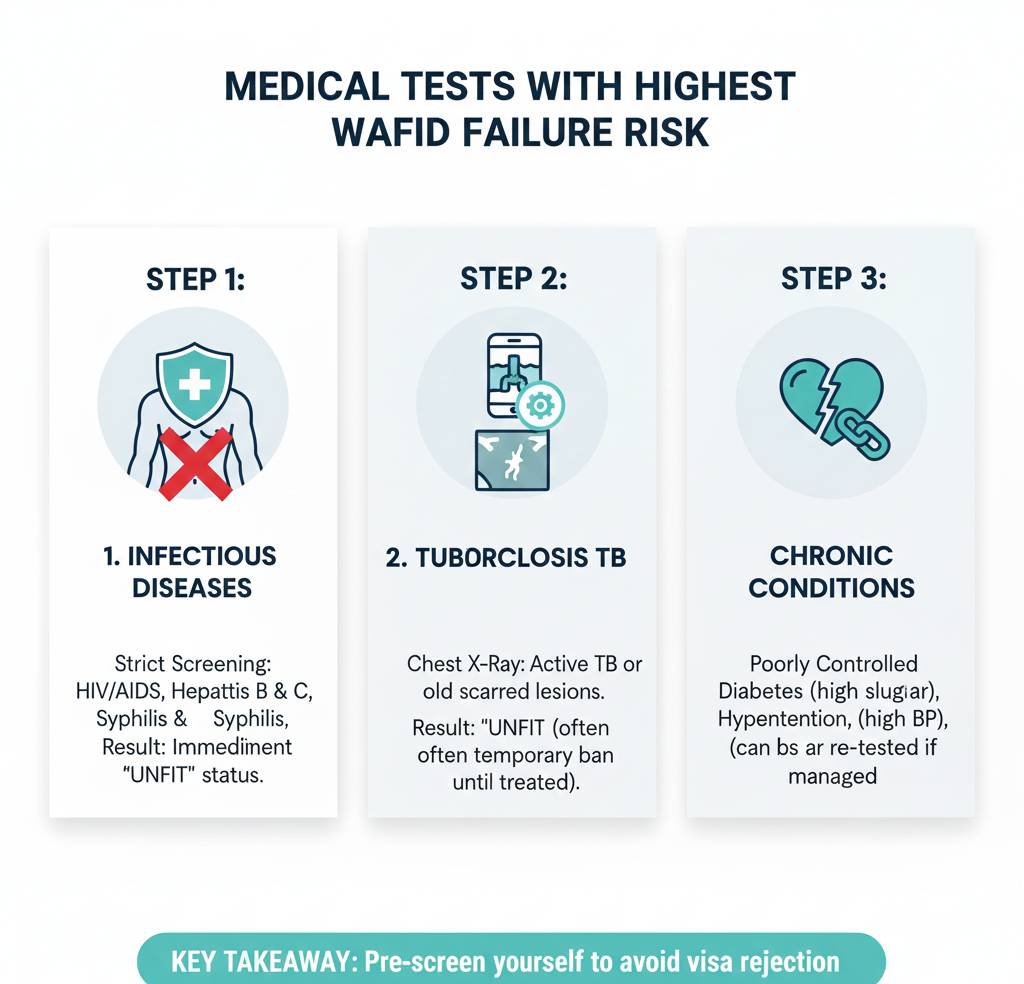
- WHO defines hypertension as readings of 140/90 mmHg or higher confirmed on measurements taken on different days. Your own doctor interprets your numbers in context.
- Preparation works: check your BP at home beforehand, reduce salt, sleep well, avoid caffeine and nicotine on the day, and arrive early.
- If you are on BP medicine, keep taking it as prescribed and declare it. Never stop treatment on your own to “look healthy”.
- Fitness decisions rest with the examining doctors under current GCC standards.
Why is blood pressure checked in the GAMCA medical?
BP is one of the basic vital signs a doctor records during a physical examination. High blood pressure is a major risk factor for heart disease, stroke and kidney problems, and WHO estimates that more than a billion adults worldwide live with hypertension, with nearly half unaware of it. A routine check can therefore be useful for you, not just for the visa process.
Why your reading may be higher on exam day
Several everyday factors can push a reading up temporarily:
- Anxiety or the “white-coat effect.” Being in a clinical setting can raise BP in people who are normal elsewhere.
- Rushing. Hurrying to the centre, climbing stairs or standing in long queues before the measurement.
- Caffeine, energy drinks and nicotine. Tea, coffee, cola, energy drinks, cigarettes and tobacco can all raise BP for a while.
- Poor sleep or a long overnight journey.
- A salty meal the day before. Pickles, papad, namkeen, instant noodles and restaurant food are common sources.
- Some medicines. Cold and decongestant tablets and certain painkillers can raise BP. Mention any you are taking.
- Measurement errors. Talking during the reading, crossed legs, an arm hanging down or a cuff that does not fit.
A high reading caused by these factors does not mean you have hypertension. It also does not mean you can ignore the number. If your readings are repeatedly high, you need a proper medical evaluation.
What happens if your reading is high?
Procedures differ between centres, but a doctor may typically:
- Ask you to sit quietly for a few minutes and repeat the measurement.
- Ask about your history, symptoms and medicines.
- Consider other findings from the examination and your reports.
- Request further evaluation, such as an ECG or additional tests, if they see a reason to.
Whether a BP finding affects your fitness depends on how well it is controlled, whether there are related complications, and the standards currently applied. One high reading does not automatically mean “unfit”, and no one can promise an outcome in advance.
How to prepare: a step-by-step plan
Two weeks before
- If you do not know your usual BP, get it checked by a doctor or a clinic.
- Use a validated upper-arm home monitor. Measure morning and evening for five to seven days, seated and rested, and write the readings down.
- If your readings are repeatedly 140/90 mmHg or higher, see a doctor before your exam rather than trying to fix it yourself.
One week before
- Cut back on salt. WHO recommends less than 5 grams of salt a day, about one teaspoon. Reduce pickles, papad, chips, namkeen and packaged snacks.
- Add fruit, vegetables and potassium-rich foods such as bananas, coconut water and leafy greens, unless your doctor has told you to limit potassium.
- Walk or exercise for about 30 minutes most days, and aim for seven to eight hours of sleep.
- Avoid alcohol and tobacco.
The day before
- Eat a light dinner and go to bed early.
- Pack your documents. See do’s and don’ts before your GAMCA appointment.
- Plan your route so you can arrive 20 to 30 minutes early.
On exam day
- Take your regular BP medicine as prescribed, unless your own doctor has told you otherwise.
- Avoid coffee, tea, energy drinks and nicotine for at least 30 minutes before the check, and preferably that morning.
- Empty your bladder before the reading.
- Sit quietly for five minutes before the measurement. Keep your back supported, feet flat on the floor, legs uncrossed, and your arm at heart level. Do not talk during the reading.
- Breathe slowly. Breathing in for four seconds and out for six, for a couple of minutes, helps many people settle.
Feeling very anxious? Read our guide to mental health and the GAMCA medical for calming techniques.
If you already have hypertension
- Keep taking your medicine exactly as prescribed. Do not skip doses or stop treatment before the exam.
- Declare it honestly. Read the role of honesty in your GAMCA medical history review.
- Carry documents: your prescription, a list of medicines with doses, recent BP readings and a short letter from your doctor stating your diagnosis, treatment and how well it is controlled.
- Check medicine rules for your destination. See can you take prescription medication before your GAMCA exam.
- Read about related conditions: long-term health conditions that affect WAFID results and how to manage diabetes before your GAMCA test.
When to seek urgent medical help
If your home reading is very high (around 180/120 mmHg or above) and you have a severe headache, chest pain, shortness of breath, vision changes, weakness or confusion, seek emergency medical care immediately. Do not wait for your GAMCA appointment.
Myths to avoid
- “A banana, garlic or lemon water right before the test will bring my BP down.” There is no reliable evidence that any food lowers BP within minutes. Steady habits over weeks help.
- “I will skip my tablet so my report looks natural.” This is unsafe and can cause a dangerous rise in BP. Always follow your doctor’s advice.
- “A friend’s BP tablet will help.” Never take medicine that was not prescribed for you.