
Blood glucose testing is an important part of medical screening for individuals planning to work or obtain residency in GCC countries. During a GAMCA/WAFID medical examination, glycemic levels can provide useful information about how effectively the body is regulating blood sugar. Abnormal glucose readings may indicate an underlying metabolic condition and can sometimes lead to additional medical evaluation before a final fitness decision is made.
Understanding Glycemic Levels
Glycemic levels refer to the amount of glucose present in the blood. Glucose is the body’s primary source of energy and is regulated mainly by insulin. When insulin production or its effectiveness is impaired, blood glucose levels can become elevated.
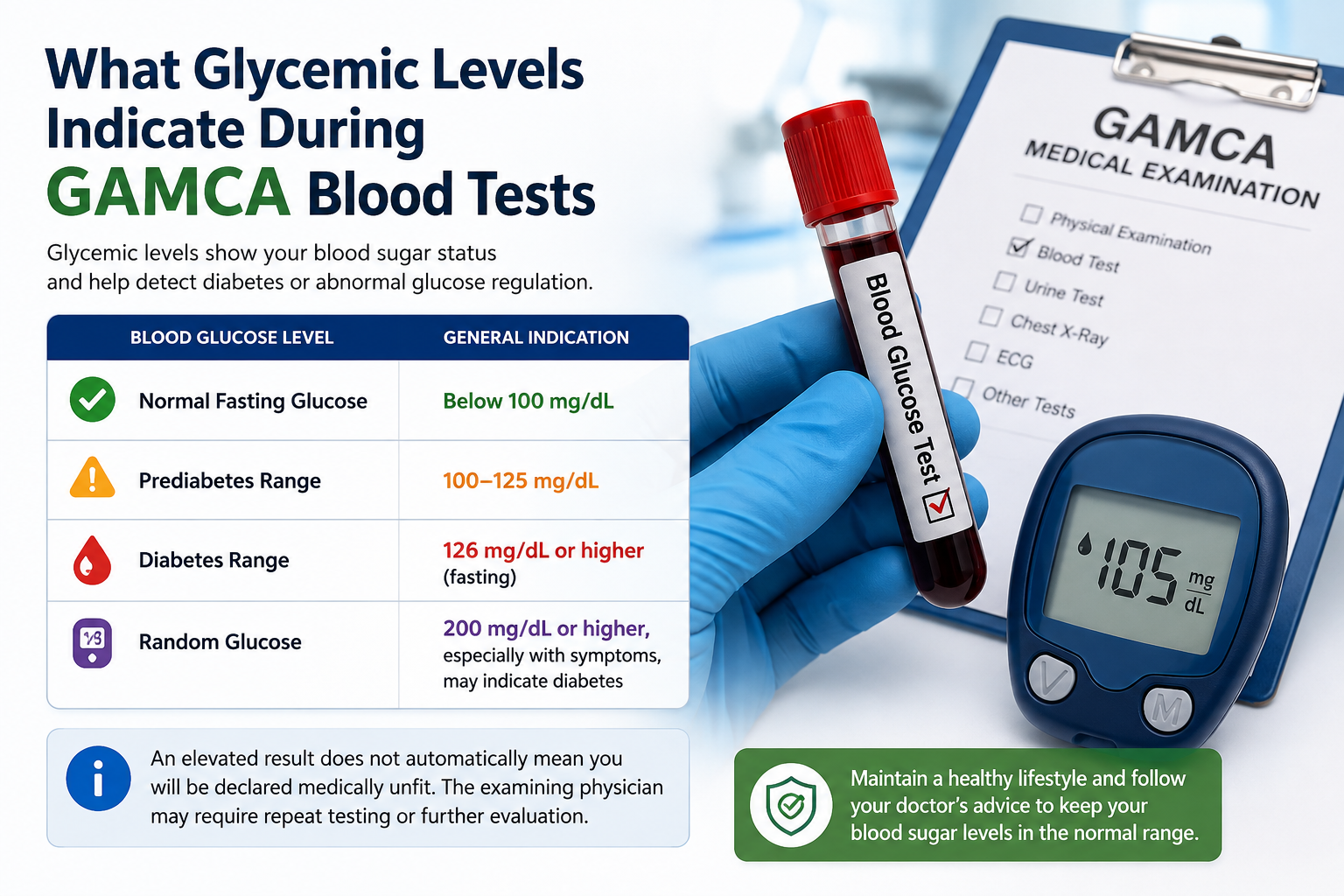
In general clinical practice, a fasting blood glucose level below 100 mg/dL is considered normal. A fasting level between 100 and 125 mg/dL may fall within the prediabetes range, while a fasting level of 126 mg/dL or above can indicate diabetes when confirmed through appropriate repeat testing or other diagnostic criteria.
These values are general medical reference ranges and should not be considered specific WAFID fitness thresholds.
Why Blood Sugar Is Checked
The purpose of glucose testing during medical screening is to identify potential health concerns that could require further assessment. Elevated blood glucose may be associated with diabetes, impaired glucose regulation, or other metabolic conditions.
A single abnormal reading does not necessarily mean that an applicant has diabetes. Blood sugar can temporarily increase because of recent food consumption, physical or emotional stress, illness, certain medications, or inadequate preparation for a fasting test.
What High Glycemic Levels May Indicate
Higher-than-normal glucose levels can indicate that the body is having difficulty maintaining normal blood sugar. Persistently elevated levels may suggest prediabetes or diabetes and could require additional laboratory testing.
Depending on the medical findings and applicable screening requirements, an applicant may be advised to undergo further evaluation. Additional tests may help determine whether the elevated reading represents a temporary fluctuation or an established medical condition.
Can High Blood Sugar Cause an Unfit Result?
An elevated glucose reading should not automatically be interpreted as an “unfit” result. Medical fitness is determined using the applicable GCC/WAFID requirements and the overall findings of the examination.
If a glucose result is abnormal, the examining medical centre may consider other clinical findings and, where required, recommend additional assessment. The final decision depends on the relevant medical regulations and the applicant’s complete medical evaluation.
Importance of Proper Preparation
Applicants should carefully follow the medical centre’s instructions before undergoing blood tests. If fasting is required, eating or drinking certain beverages before the examination can influence glucose measurements.
Applicants should also provide accurate information about medications and previously diagnosed medical conditions. Attempting to alter or conceal health information can interfere with proper medical assessment.
Conclusion
Glycemic testing during GAMCA/WAFID medical screening provides an indication of blood sugar regulation and can help identify possible diabetes or other metabolic concerns. While abnormal glucose levels may result in further evaluation, they do not automatically mean that an applicant will receive an unfit result.
Applicants should follow the authorised medical centre’s preparation instructions and rely on the current WAFID/GCC medical requirements for the final assessment. Because medical standards and procedures may change, general glucose reference ranges should not be treated as official fitness criteria.