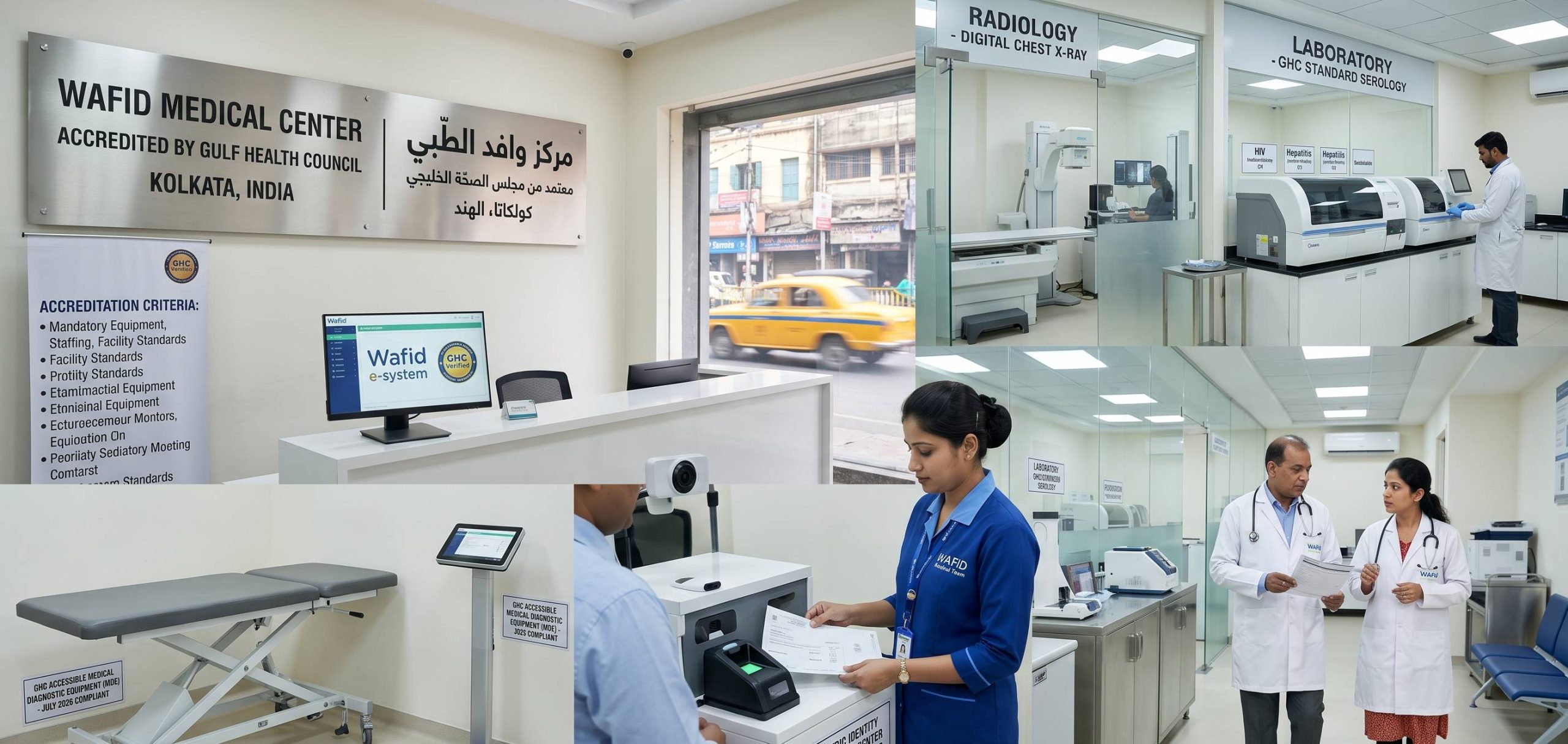
The movement of expatriate workers and residents across GCC countries requires close coordination between healthcare authorities, visa-issuing bodies, embassies and foreign ministries. Medical fitness is an important part of this process because applicants must generally complete the required health examination before obtaining certain employment or residence visas.
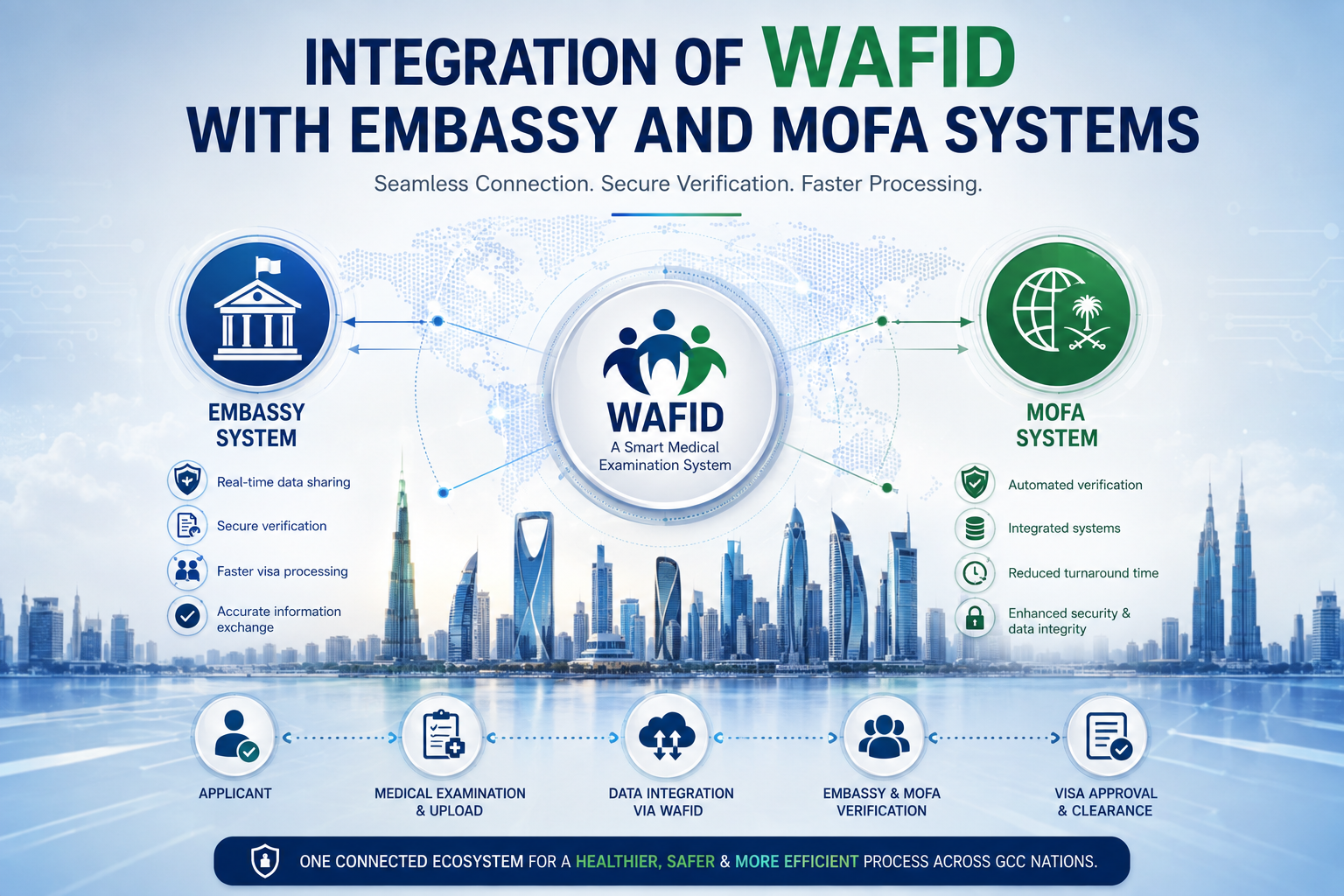
The WAFID Program, operated under the Gulf Health Council, provides an electronic framework for expatriate medical examinations. Its connection with embassy and Ministry of Foreign Affairs (MOFA) processes helps create a more coordinated pathway between medical screening and visa processing. WAFID’s official regulations specifically state that embassies, representative agencies and visa authorities may verify an electronic medical fitness certificate through its QR code or through the electronic system connecting the Council with GCC Ministries of Foreign Affairs.
How WAFID Supports the Visa Process
WAFID begins the process on the medical-screening side. Applicants seeking employment or residence in GCC countries can book their medical examination through the WAFID platform. The system records important applicant information, including passport details, nationality, destination country and other identification information.
After the examination is completed, the medical result is recorded in the electronic system. Applicants can subsequently check their medical status using their passport number and nationality or their WAFID slip number.
This electronic approach creates a connection between the medical examination process and the subsequent visa procedure.
Electronic Medical Fitness Certificates
One of the most important elements of WAFID’s integration with visa authorities is the electronic medical fitness certificate.
Under the WAFID regulations, once the medical examination information has been reviewed and entered into the electronic system, a medical fitness certificate is issued containing a QR code. The applicant can download or print the certificate and present it to the relevant GCC embassy, representative agency or visa authority when required.
The QR code provides an additional method for verifying that the certificate is associated with the electronic medical examination record rather than relying solely on a paper document.
Connection With GCC Ministries of Foreign Affairs
WAFID’s regulations specifically recognise electronic interaction between the Gulf Health Council and GCC Ministries of Foreign Affairs. Embassies, representative agencies and visa authorities can verify medical fitness certificates through the QR code or through the electronic system between the Council and GCC MOFA authorities.
This is important because medical fitness is one component of a larger visa process. Instead of treating the medical certificate as an entirely separate paper document, electronic verification allows visa authorities to confirm the validity of the medical information through the designated systems.
The Gulf Health Council’s 2024 annual report also reports that four Gulf countries were integrated with the WAFID system, demonstrating the ongoing development of electronic connectivity between the WAFID program and national systems.
Role of Embassies and Representative Agencies
Embassies and authorised representative agencies can play an important role in the final stages of visa processing. Once an applicant has completed the required medical examination, the medical fitness certificate can be submitted to the relevant authority where required.
The WAFID regulations specifically state that expatriates may approach a GCC embassy or its representative agency to obtain the visa or submit the electronic certificate to the authorities responsible for visa issuance.
This provides a structured connection between the health-screening process completed in the applicant’s home country and the immigration process administered by the destination country.
MOFA Systems and Health Certificate Verification
Foreign ministries increasingly provide digital visa services, making electronic verification particularly useful. For example, Saudi Arabia’s Ministry of Foreign Affairs lists a service for verification of health certificate issuance, allowing verification of health certificate issuance from the medical centre.
Saudi Arabia’s MOFA visa platform also provides electronic services for visa applications and includes services for approved healthcare providers outside Saudi Arabia to add medical examination results.
These services demonstrate how health information can become part of a broader electronic visa ecosystem rather than being processed entirely through physical documents.
Reducing Manual Verification
One of the major advantages of electronic integration is the reduction of manual document verification.
In a paper-based process, applicants may need to carry medical reports between medical centres, visa agents, embassies and other authorities. Paper documents can be lost, damaged, altered or submitted with incorrect information.
Electronic verification provides another layer of control. Instead of relying only on the physical appearance of a certificate, authorised authorities can verify the underlying electronic record or QR code where the applicable system supports it.
This can make the visa process more efficient while improving confidence in the authenticity of medical documents.
Improving Data Accuracy
WAFID collects important identity and examination information during the booking and medical-screening process. The platform requires applicants to provide details such as passport number, nationality, date of birth and other information, while its FAQ explains procedures for correcting incorrect candidate information through the medical centre.
Accurate data is particularly important when medical information is connected to immigration and visa records. A mismatch in a passport number, name or nationality could potentially create difficulties during verification.
Electronic systems can therefore help maintain consistency between medical records and visa-related information when properly integrated.
Strengthening Document Security
Medical certificates are sensitive documents, and their authenticity is important for both public health and immigration control. WAFID’s use of electronic records and QR-coded medical fitness certificates provides a mechanism for authorised authorities to verify certificates.
This helps reduce dependence on documents that can be manually altered or reproduced. It also supports the broader objective of maintaining reliable medical screening information for individuals entering GCC countries for employment or residence.
Supporting Public Health and Immigration Objectives
The integration of WAFID with embassy and MOFA systems serves two related objectives: protecting public health and supporting efficient visa administration.
WAFID’s stated purpose includes ensuring health safety and security in Gulf communities by preventing communicable diseases that may be carried by expatriates and confirming that individuals are medically fit to work or live in GCC countries.
Visa authorities, meanwhile, need reliable information to determine whether applicants have satisfied the relevant requirements. Connecting the medical examination system with visa-related verification mechanisms allows health information to be considered as part of the wider immigration process.
A More Connected GCC Visa Ecosystem
The integration of WAFID with embassy and MOFA systems represents a broader shift toward digital government services across the GCC. Medical screening, visa applications and document verification can increasingly operate through interconnected electronic systems.
WAFID provides the medical examination component, while embassies, foreign ministries and other authorised authorities handle relevant visa and immigration functions. When these systems communicate effectively, applicants benefit from a more structured process and authorities gain better access to reliable verification mechanisms.
However, the exact workflow can differ between GCC countries and visa categories. Applicants should therefore follow the requirements of the specific destination country and the relevant embassy or visa authority.
Conclusion
The integration of WAFID with embassy and MOFA systems is an important development in the digital management of expatriate medical screening and visa processing across the GCC.
By providing electronic medical records, medical fitness certificates and QR-based verification, WAFID creates a reliable link between medical examination centres and visa authorities. Its regulations specifically provide for verification by embassies and visa authorities through the QR code or electronic systems connecting the Gulf Health Council with GCC Ministries of Foreign Affairs.
As GCC governments continue expanding digital visa and government services, stronger integration between health and immigration systems can help improve verification, data accuracy, document security, processing efficiency and public health protection.
Ultimately, WAFID’s connection with embassy and MOFA systems demonstrates how digital health infrastructure can support a more coordinated and secure international workforce mobility system across GCC nations.