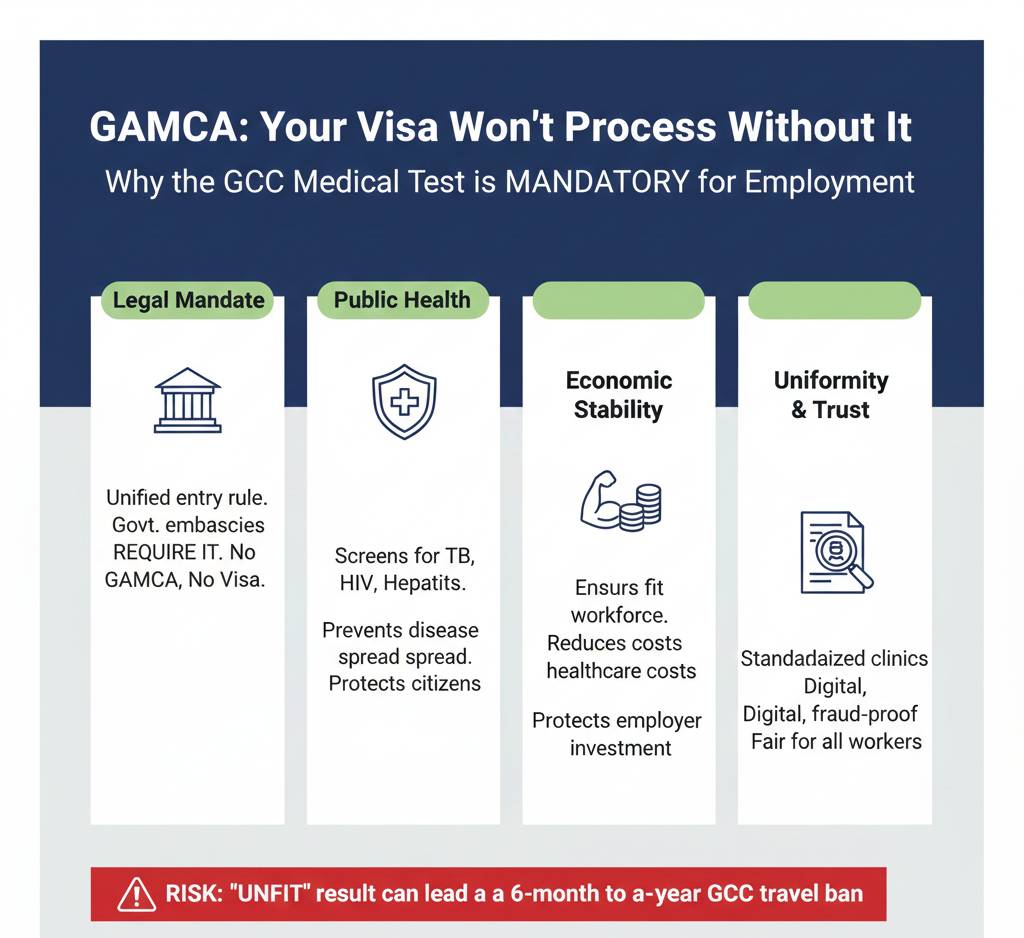

The GAMCA medical screening system is a critical requirement for individuals seeking employment in GCC countries. Its primary objective is to protect public health while ensuring that incoming workers are medically fit for their roles. While many medical conditions are temporary and allow for reapplication after treatment, certain diseases can lead to a permanent ban under GAMCA medical guidelines. These decisions are not arbitrary but are based on strict health, economic, and social considerations followed across GCC nations.
Understanding why some diseases result in permanent restrictions helps applicants better prepare and avoid unexpected outcomes during the medical screening process.
Purpose of Strict Medical Screening in GAMCA
The GAMCA system is designed to prevent the spread of infectious diseases and reduce the burden on healthcare systems in GCC countries. Since these countries host a large expatriate workforce, maintaining strict health standards is essential for:
- Public safety
- Workplace productivity
- Healthcare cost control
- Prevention of disease outbreaks
For this reason, diseases that pose long-term risks or cannot be fully controlled are treated with greater caution.
Categories of Diseases That May Lead to Permanent Ban
Not all medical conditions result in permanent ineligibility. GAMCA generally distinguishes between treatable conditions and chronic or high-risk diseases. Permanent bans are typically associated with the following categories.
Chronic Infectious Diseases
Diseases such as HIV/AIDS are considered among the most strictly regulated conditions. Since there is no complete cure and the condition requires lifelong management, it is often classified under permanent disqualification in GCC medical screening.
Similarly, certain advanced cases of hepatitis B or C, especially those with high viral loads or liver complications, may lead to long-term or permanent restrictions depending on the country and job category.
Active and Drug-Resistant Tuberculosis
Tuberculosis is one of the most closely monitored diseases in GAMCA screening. While treatable TB may allow reapplication after recovery, drug-resistant TB or repeatedly recurring TB cases can lead to permanent bans. This is because such conditions pose a higher risk of transmission and are more difficult to manage.
Severe Communicable Diseases with High Transmission Risk
Any disease that spreads easily in communal or workplace environments and lacks reliable containment measures is treated seriously. These include infections that can rapidly affect large populations, particularly in densely populated labour accommodations.
Public Health Risk as the Primary Factor
The most important factor behind permanent bans is public health risk. GCC countries prioritise preventing diseases that:
- Spread quickly among populations
- Require long-term treatment
- Have no guaranteed cure
- Can impact large workforce groups
If a disease meets these criteria, it is more likely to result in permanent restrictions rather than temporary unfitness.
Impact of Job Category on Medical Decisions
Another key factor is the type of job the applicant is applying for. Certain professions carry higher health sensitivity, such as:
- Domestic workers
- Food handlers
- Healthcare staff
In these roles, the risk of disease transmission is significantly higher. As a result, even conditions that might be acceptable in other job categories can lead to stricter decisions, including permanent bans in some cases.
Long-Term Healthcare Burden Considerations
GCC countries also evaluate the economic and healthcare impact of chronic diseases. Conditions requiring:
- Lifelong medication
- Frequent hospitalization
- Specialized treatment
may place a long-term burden on the healthcare system. To manage resources effectively, such cases are often restricted under GAMCA medical guidelines.
Re-Medical Limitations for Certain Conditions
While many applicants are allowed to reapply after treatment, some diseases do not offer this flexibility. Permanent bans are usually applied when:
- The disease cannot be fully cured.
- There is a high chance of recurrence.
- Treatment outcomes are uncertain.
This ensures that only medically stable individuals are approved for long-term employment in GCC countries.
Misconceptions About Permanent GAMCA Ban
There are several misconceptions surrounding permanent bans in GAMCA screening. One common misunderstanding is that all positive test results lead to permanent rejection. In reality, many conditions, such as minor infections or treatable diseases, only result in temporary unfitness.
Another misconception is that there is no chance of review. While permanent bans are strict, they are based on established medical criteria rather than random decisions. In some cases, further medical evaluation or updated reports may provide clarity, especially if the initial diagnosis is uncertain.
Role of Accurate Diagnosis
Accurate diagnosis plays a crucial role in determining whether a condition leads to a permanent ban. Errors in testing or interpretation can sometimes result in incorrect classification. This is why confirmatory testing and proper medical documentation are important for applicants.
Providing complete medical history, previous treatment records, and additional reports can help ensure that decisions are based on accurate information.
Future Trends in GAMCA Medical Evaluation
The GAMCA/WAFID system continues to improve with advancements in medical technology. Future developments may include:
- More precise diagnostic tools
- Improved disease classification systems
- Digital health record integration
- Enhanced transparency in reporting
These improvements can help reduce uncertainty and ensure fair evaluation for all applicants.
Conclusion
Certain diseases lead to permanent GAMCA bans primarily due to their long-term health risks, high transmission potential, and impact on public safety. The system is designed to balance individual opportunities with the broader goal of protecting communities and maintaining a healthy workforce.
While permanent bans may seem strict, they are based on well-defined medical and policy considerations. For applicants, understanding these factors and preparing accordingly can make the GAMCA medical process more predictable and manageable.