
Now administered by the system, the GAMCA (Gulf Approved Medical Centers Association) medical test is a required health screening for anyone seeking employment or residency visas in the Gulf Cooperation Council (GCC), which includes Saudi Arabia, the United Arab Emirates, Qatar, Kuwait, Bahrain, and Oman. Senior citizens are subject to special considerations because of age-related health difficulties, even though the normal exams are the same for most candidates. Older travelers can better prepare and avoid being labeled “UNFIT” by being aware of these age restrictions and medical requirements.
Are There Age Limits for GAMCA Medical Tests?
GAMCA does not specify an upper age limit for undergoing the medical test. People even above 60 or 65 years may still undergo the examination as long as the destination country and employer permit visa issuance.
However:
- Some employers prefer candidates below 55–60 years, depending on the job type.
- Certain job categories—like heavy labor, domestic work, and industrial operations—may not accept applicants above 50–55 years due to physical demands.
- Residence or family visas often allow senior applicants more flexibility compared to employment visas.
Key Point:
Even though GAMCA itself allows all ages, the visa-issuing country or employer may impose age restrictions.
Even though GAMCA itself allows all ages, the visa-issuing country or employer may impose age restrictions.
Health Criteria for Senior Citizens Under GAMCA
Certain health problems grow increasingly prevalent as people age. The GAMCA medical examination is intended to screen for chronic illnesses and infectious diseases that could compromise an elderly person’s ability to travel or work.
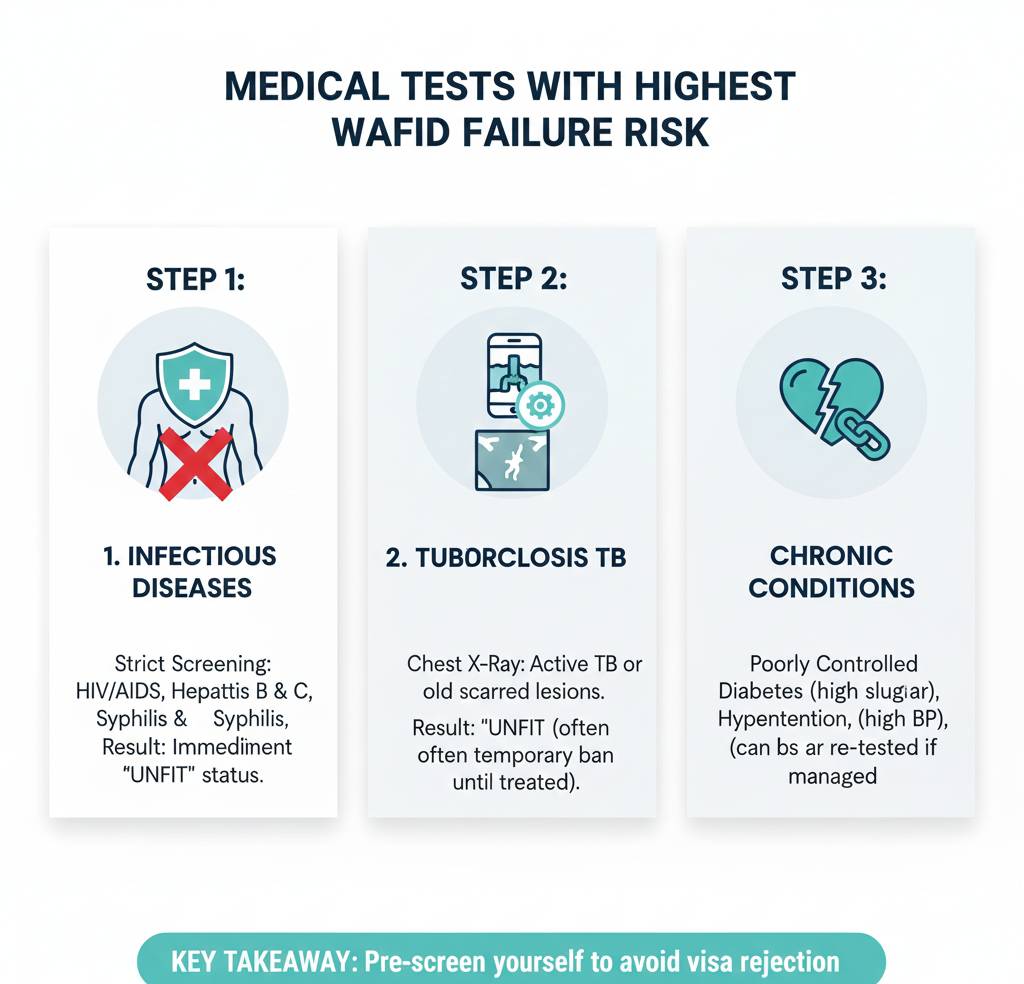
1. Infectious Disease Screening (Mandatory for All Ages)
Senior citizens undergo the same infectious disease tests as younger applicants:
- HIV/AIDS
- Hepatitis B & C
- Syphilis
- Malaria (in some regions)
- Tuberculosis (through chest X-ray)
A positive result for any of these usually leads to an UNFIT status, regardless of age.
2. Chest X-Ray (High Importance for Older Applicants)
Senior citizens are more prone to lung-related issues, such as:
- Old TB scars
- Chronic Obstructive Pulmonary Disease (COPD)
- Age-related fibrosis
Even old or healed TB may raise concerns during the X-ray evaluation.
If abnormalities appear, the applicant may be asked to take additional sputum tests, which may delay or impact the final result.
If abnormalities appear, the applicant may be asked to take additional sputum tests, which may delay or impact the final result.
3. Blood Tests (Focus on Age-Related Disorders)
Elderly applicants are checked for:
- Diabetes (high blood sugar levels)
- Kidney function (creatinine, urea)
- Liver function
- Cholesterol levels
- Severe anemia
While these conditions do not automatically cause “UNFIT” results, extreme abnormalities can.
For example:
For example:
- Very high blood sugar (uncontrolled diabetes)
- Critical kidney failure
- Liver cirrhosis
These may lead to rejection due to the medical strain they may cause abroad.
4. Blood Pressure Evaluation
High blood pressure is common among senior citizens.
In GAMCA:
In GAMCA:
- Mild to moderate hypertension is usually acceptable.
- Extremely high or uncontrolled BP may cause temporary rejection until stabilized through medication.
5. Physical Fitness and Mobility Assessment
If the job requires physical labor, senior citizens may undergo additional fitness checks to assess:
- Mobility
- Strength
- Heart health
- Risk of falls or injuries
For non-labor jobs or family visas, these checks are less strict.
Common Reasons Senior Citizens Get Marked “UNFIT”
Some health conditions become more prevalent with age and may impact the GAMCA decision:
|
Active Tuberculosis
|
Immediate UNFIT |
|
Old TB scars with unclear healing
|
May require additional tests; possible UNFIT |
|
Uncontrolled Diabetes (Very High Sugar)
|
High chance of temporary or permanent UNFIT |
|
Severe Hypertension (Very High BP)
|
Temporary UNFIT until stabilized |
|
Chronic Kidney Disease
|
High chance of UNFIT |
|
Serious heart conditions
|
Often marked UNFIT depending on severity |
|
Cirrhosis or severe liver disease
|
Likely UNFIT |
Note: The stricter criteria are mainly for employment visas. Family/re-entry visas often have more lenient assessments.
Is the GAMCA Test Different for Senior Applicants?
Generally, the test is the same, but senior citizens should expect:
- More detailed evaluation of chronic health conditions
- Closer scrutiny of X-rays
- Possible additional clearance from specialists
- Higher chance of delays if abnormalities appear
How Senior Citizens Can Prepare for the GAMCA Test
1. Control Your Blood Pressure
Take medication regularly and avoid stress on the test day.
2. Maintain Stable Blood Sugar
Diabetic patients should avoid skipping meals and keep sugar levels within a safe range.
3. Carry Medical Records
Include:
- Prescription medication list
- Reports of past surgeries
- TB treatment completion certificates (if applicable)
These documents help explain old scars or abnormalities.
4. Stay Hydrated and Well-Rested
Fatigue or dehydration may affect results like urine tests or BP readings.
5. Continue Regular Medication
Never skip regular medicine before the test unless your doctor advises otherwise.
GAMCA Result Timeline for Senior Citizens
Most results appear within:
- 24–48 hours for standard tests
- 3–5 days if additional checks are required
- Longer if sputum tests or specialist evaluations are needed
All results are uploaded digitally to the Gamca portal.
Conclusion
There is no age restriction on the GAMCA medical test for senior persons, however, older applicants must fulfill the health requirements established by GCC nations. All ages must undergo rigorous screening for infectious diseases, but age-related problems like diabetes, high blood pressure, and abnormal X-rays need to be carefully managed. Senior applicants can greatly increase their chances of obtaining a FIT report by being well-prepared, keeping up their health, and carrying the appropriate medical documentation.