If you’re planning to work in a Gulf Cooperation Council (GCC) country—like Saudi Arabia, the UAE, Qatar, Kuwait, Oman, or Bahrain—passing the medical fitness test is a crucial step. This test, conducted under the GAMCA system, ensures that all incoming workers are healthy, free from infectious diseases, and physically fit for their roles.
Let’s break down what’s involved and what you should be prepared for:
Common Medical Tests You’ll Undergo
1. Physical Examination:
This includes a general health check, vital signs (like blood pressure and heart rate), height, weight, and a basic assessment of your major organs.
2. Blood Tests:
-
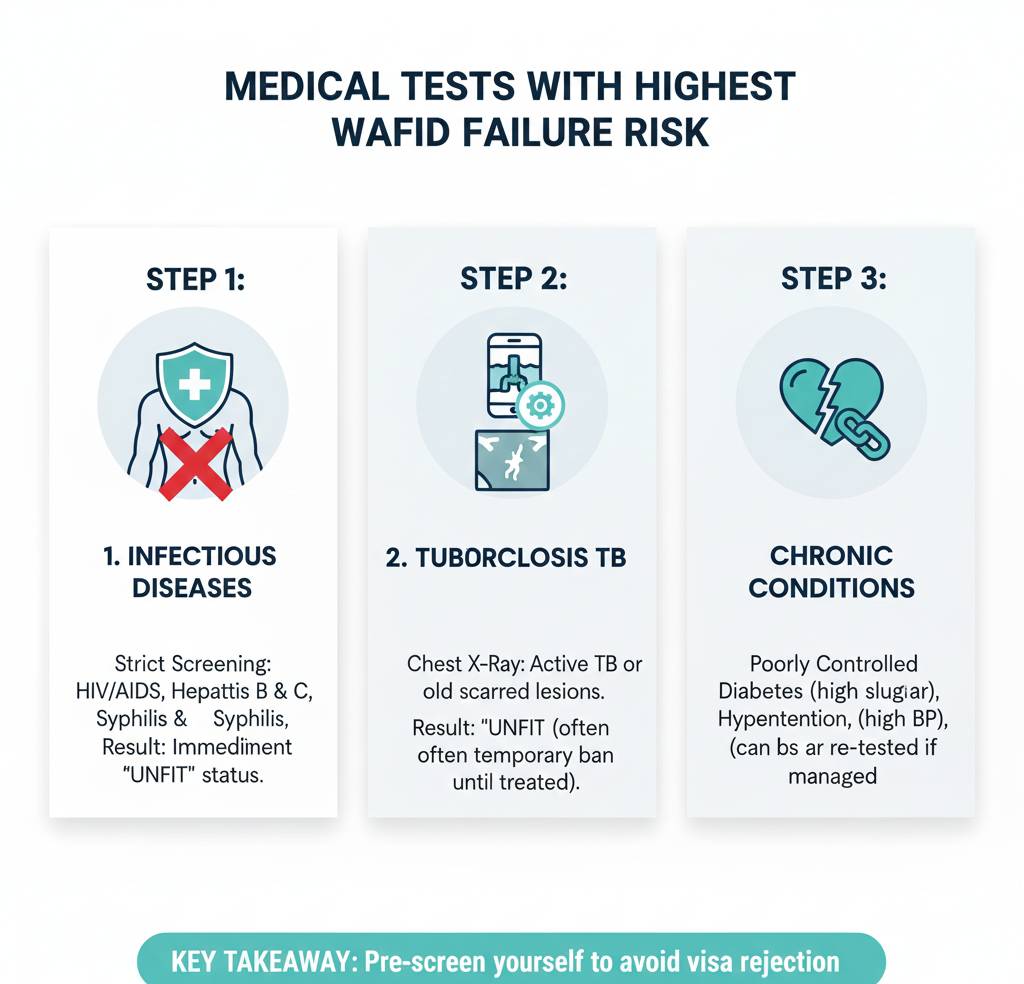
HIV/AIDS – Mandatory screening.
-
Hepatitis B & C – Tests to detect these liver-affecting viral infections.
-
Syphilis – Screening for this sexually transmitted infection.
-
CBC (Complete Blood Count) – Checks overall health and detects signs of anemia or infection.
-
Malaria – Often required for applicants from high-risk regions.
3. Urinalysis (Urine Test):
Used to detect sugar (diabetes), albumin (kidney issues), infections, or drug use.
4. Chest X-ray:
Primarily to rule out active or old (untreated) Tuberculosis (TB).
5. Eye Exam:
A basic vision check, with detailed tests like color blindness screening if your job requires it (e.g., drivers, technicians).
6. Stool Test:
May be needed for applicants in food handling, housekeeping, or domestic work roles, to rule out parasites and infections.
7. Mental Health Screening:
Basic assessment to ensure candidates do not have severe untreated psychiatric disorders.
8. Drug & Alcohol Testing:
Especially critical for roles like driving or operating machinery.
Common Disqualifying Conditions
Your medical fitness can be affected by several health issues, especially if they pose a risk to public health or impair your ability to work.
Infectious Diseases:
-
Active or untreated Tuberculosis (TB)
-
HIV/AIDS
-
Hepatitis B or C
-
Active Malaria
Chronic Conditions:
-
Uncontrolled Diabetes (especially with complications like nerve or eye damage)
-
Severe Hypertension
-
Late-stage Kidney Disease
Neurological & Psychiatric Conditions:
-
Poorly controlled Epilepsy
-
Severe psychiatric disorders (e.g., schizophrenia, bipolar disorder)
Physical Limitations:
-
Major mobility issues or limb loss that interferes with work
-
Severe spinal deformities or other serious musculoskeletal conditions
Other Medical Concerns:
-
Moderate to severe hearing loss
-
Untreated color blindness (if the job requires color vision)
-
Untreated genital herpes
-
Chronic respiratory symptoms or frequent fainting
-
Severe skin diseases (e.g., eczema, psoriasis requiring long-term medication)
Key Things to Keep in Mind
1. GAMCA System:
Since April 2018, all medical appointments are managed online through the Gamca portal. You must generate a medical slip and will be automatically assigned a test center.
2. Different Rules by Country:
Although Gamca brings some consistency, there may still be slight variations in medical standards between GCC countries. Always check the latest requirements for your destination.
3. Employer-Specific Checks:
Your employer might ask for extra tests based on the nature of the job, so be ready for that possibility.
4. Validity and Reapplication:
A “fit” certificate usually remains valid for 60–90 days. If you are declared “unfit,” reapplying may only be possible after a ban period (usually 3 months), depending on the condition.
5. Prepare Ahead:
Get a pre-medical checkup from your doctor to spot and address any issues early. Also, bring any existing medical records or prescriptions with you, it helps streamline your medical clearance.
Final Note:
Medical fitness is not just a formality, it’s a gateway to your job abroad. Make sure you understand the requirements, prepare thoroughly, and consult official sources like the Gamca website or your employer for the latest and most accurate updates.