
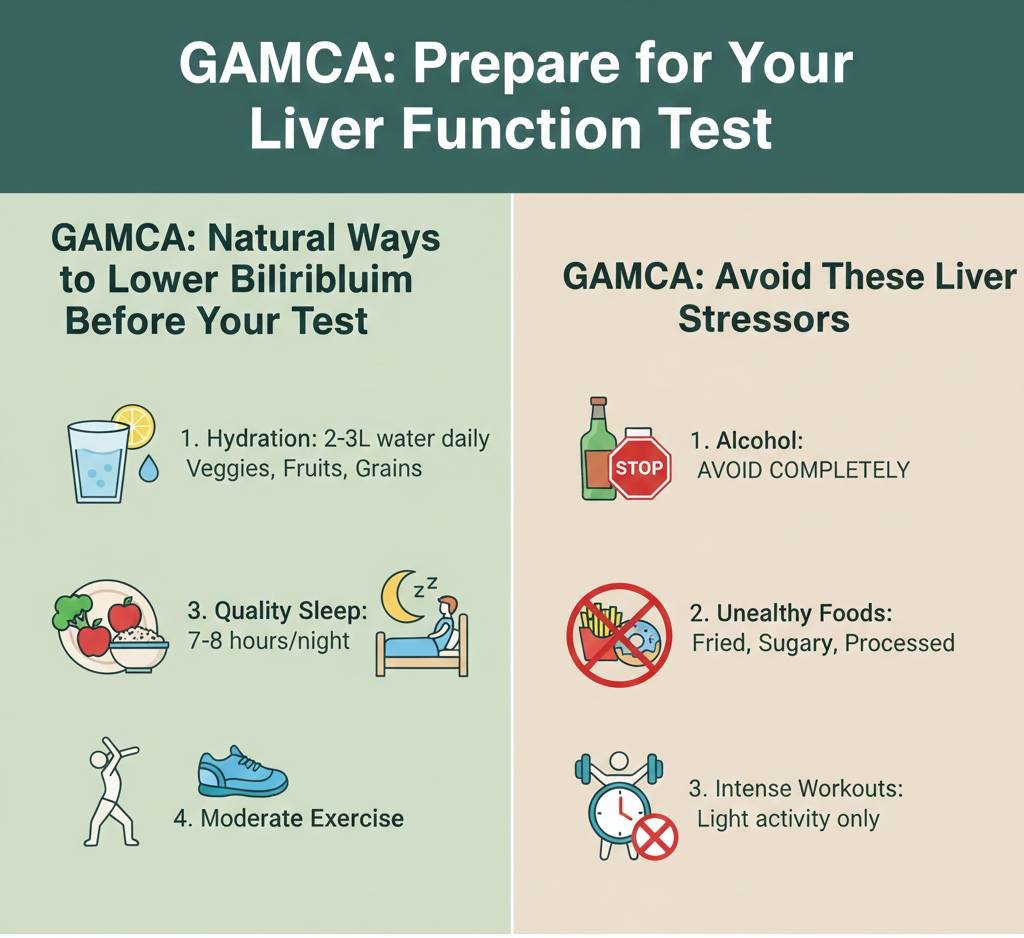
If you are preparing for a GAMCA medical examination or any pre-employment health screening, elevated bilirubin levels can be a concern. Bilirubin is a yellow pigment produced during the breakdown of red blood cells, and high levels may indicate liver dysfunction, bile duct obstruction, or certain blood disorders.
This guide explains how to lower high bilirubin levels naturally, especially if your test is approaching, while maintaining a safe and medically responsible approach.
Understanding Bilirubin and Its Importance
During the GAMCA medical test, liver function is evaluated through blood analysis, including bilirubin levels. Elevated bilirubin may signal:
- Liver inflammation
- Fatty liver disease
- Hepatitis
- Bile duct blockage
- Hemolytic anemia
While mildly elevated bilirubin may not always result in medical rejection, significantly abnormal results can require further investigation.
1. Increase Water Intake
Adequate hydration supports liver detoxification and proper metabolic function. Drinking sufficient water helps the body:
- Flush out toxins
- Improve bile flow
- Support kidney and liver performance
Aim for 2–3 liters of water daily, unless restricted by a healthcare professional.
2. Improve Your Diet Immediately
A liver-friendly diet can help stabilize bilirubin levels naturally.
Include:
- Leafy green vegetables
- Citrus fruits (in moderation)
- Apples and pears
- Whole grains
- Lean proteins
- Beetroot and carrots
Avoid:
- Fried and oily foods
- Excess sugar
- Processed foods
- Alcohol (strictly avoid)
- Excessive red meat
Reducing liver strain is critical before undergoing a liver function test.
3. Completely Avoid Alcohol
Alcohol is one of the most common causes of elevated bilirubin and liver enzyme levels. Even moderate alcohol intake can:
- Irritate liver cells
- Increase inflammation
- Temporarily elevate bilirubin
If your medical test is approaching, abstain from alcohol entirely for several weeks.
4. Get Adequate Sleep
Sleep plays a crucial role in metabolic regulation and liver recovery. Insufficient sleep may:
- Increase systemic inflammation
- Disrupt liver detoxification processes
Aim for 7–8 hours of quality sleep per night.
5. Maintain Moderate Physical Activity
Light to moderate exercise helps:
- Improve blood circulation
- Reduce fatty liver risk
- Enhance metabolic balance
Activities such as walking, stretching, or light cardio can support liver function. However, avoid intense workouts immediately before a blood test, as extreme exertion may temporarily affect laboratory results.
6. Consider Natural Liver-Supporting Remedies (With Caution)
Some natural substances are traditionally associated with liver support, including:
- Turmeric
- Ginger
- Lemon water
- Milk thistle (after medical consultation)
These should not replace medical treatment, and you should consult a healthcare professional before starting supplements.
7. Identify the Underlying Cause
It is important to understand that bilirubin levels rise due to underlying conditions. Natural remedies may help mildly elevated levels, but if bilirubin is significantly high, it may be due to:
- Hepatitis infection
- Gallstones
- Genetic conditions (e.g., Gilbert’s syndrome)
- Liver disease
If levels are persistently elevated, professional medical evaluation is necessary before proceeding with your examination.
Important Note for GAMCA Applicants
GAMCA conducts liver function testing as part of its mandatory medical screening for GCC employment. If bilirubin is moderately elevated, further testing may be required. Severe liver dysfunction may affect medical clearance.
Attempting unsafe “quick fixes” or unverified detox treatments is strongly discouraged. Sustainable lifestyle adjustments are the safest and most effective approach.
When to Seek Medical Advice
Consult a doctor immediately if you experience:
- Yellowing of eyes or skin (jaundice)
- Dark urine
- Pale stools
- Abdominal pain
- Persistent fatigue
These may indicate serious liver conditions that require treatment rather than short-term adjustment.
Conclusion
Lowering high bilirubin levels naturally involves improving hydration, adopting a liver-friendly diet, avoiding alcohol, managing stress, and maintaining healthy sleep patterns. While mild elevations may improve with lifestyle modifications, persistent or significantly high bilirubin levels require professional medical evaluation.
If you are preparing for a GAMCA medical examination, prioritize long-term liver health rather than short-term remedies. A medically sound and responsible approach ensures accurate results and protects your overall well-being.