Medical screening for expatriates entering GCC countries is strictly regulated under the Gulf Approved Medical Centres Association, now widely known as WAFID. This system ensures that only medically fit individuals are allowed to work and reside in the region. To maintain the highest standards of accuracy, transparency, and public health safety, medical centres operating under this framework must adhere to stringent rules established by the Health Ministers’ Council for GCC States.
However, when medical centres fail to comply with these regulations, a well-defined enforcement framework comes into play. This includes penalties, classification of violations, and suspension mechanisms designed to protect the integrity of the entire medical screening system.
Legal Framework Governing Enforcement
The enforcement of penalties against non-compliant medical centres is rooted in binding resolutions issued by the Health Ministers’ Council for GCC States, along with unified GAMCA/WAFID regulations and oversight policies implemented by the Gulf Health Council. These legal instruments empower authorities to monitor, audit, and take corrective action against accredited medical centres.
Once these regulations are adopted, they become legally enforceable across GCC countries, ensuring that all approved centres operate under a uniform compliance regime. This legal backing is crucial in maintaining trust among governments, employers, and visa applicants.
Types and Classification of Violations
Violations under the Gulf Approved Medical Centres Association framework can vary significantly in nature and severity. Common violations include issuing fraudulent or manipulated medical reports, failing to follow standardised testing protocols, using outdated or non-calibrated equipment, employing unqualified staff, and breaching patient confidentiality. Delays or inaccuracies in uploading medical reports to centralized systems are also considered violations.
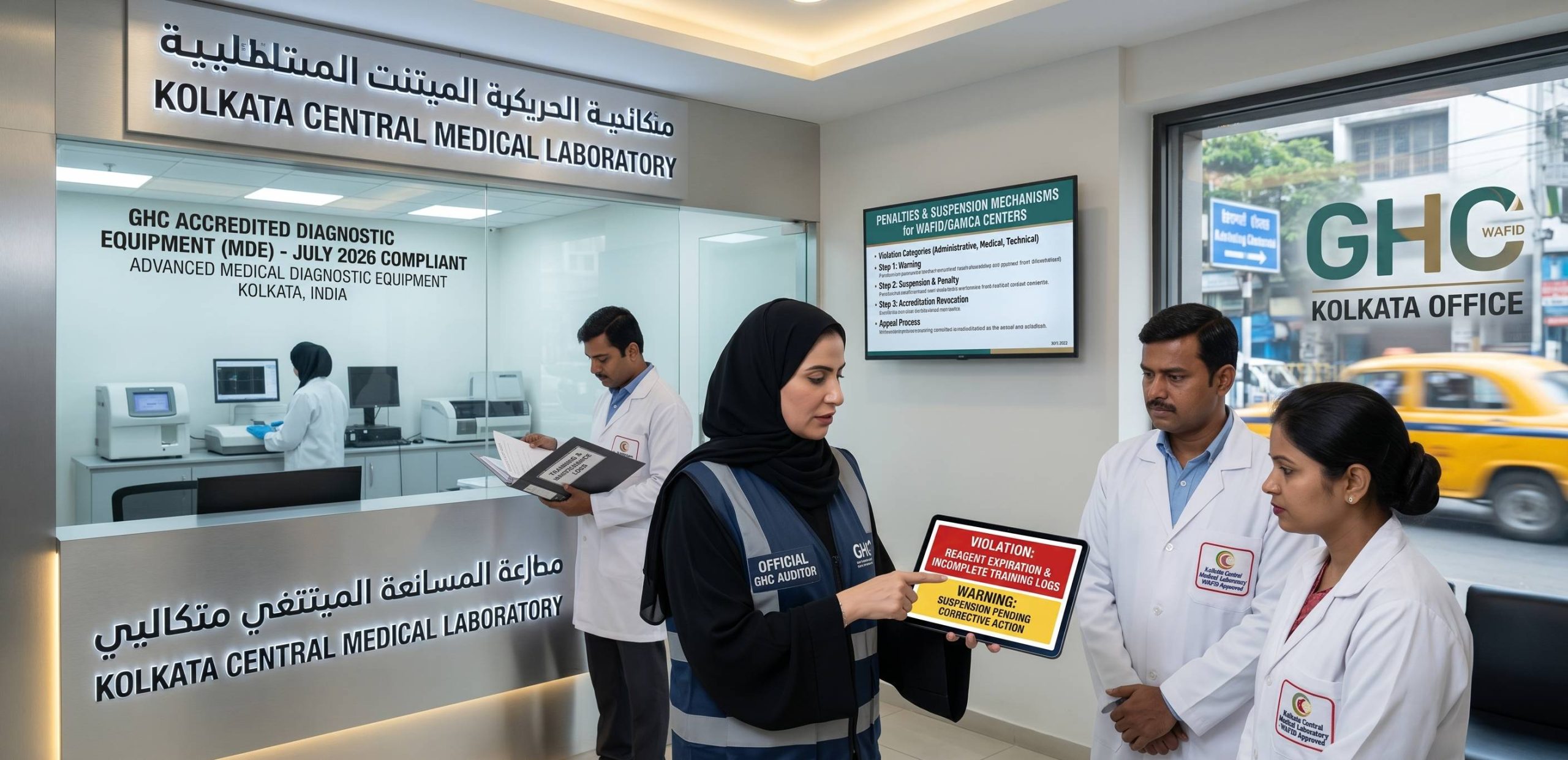
To ensure fairness in enforcement, these violations are generally classified into three categories. Minor violations involve administrative errors or small procedural lapses that do not significantly impact medical outcomes. Major violations include repeated non-compliance, incorrect diagnoses, or failure to meet accreditation standards. Critical violations represent the most serious breaches, such as fraud, corruption, or deliberate falsification of medical results. This classification system allows authorities to impose proportionate penalties based on the severity of the offence.
Penalty Framework for Non-Compliance
The penalty framework under GAMCA/WAFID is designed to deter misconduct while encouraging compliance. For minor violations, authorities typically issue warning notices requiring corrective action within a specified period. These warnings serve as an opportunity for medical centres to address deficiencies without facing severe consequences.
For more serious breaches, financial penalties may be imposed. Fines act as a deterrent against repeated non-compliance and signal the importance of adhering to established protocols. In cases of major violations, temporary suspension may be enforced, preventing the medical center from conducting official examinations for a certain period.
The most severe penalty is permanent blacklisting. Medical centers found guilty of critical violations, such as fraud or systematic manipulation of reports, may be permanently removed from the Gulf Approved Medical Centers Association network. This not only affects their operations but also damages their professional reputation.
Suspension Mechanisms and Procedures
Suspension is one of the most effective enforcement tools within the WAFID system. It is typically applied when a medical centre repeatedly violates regulations or fails to meet required standards. Grounds for suspension include non-compliance with testing protocols, failure to maintain equipment and staffing standards, and evidence of fraudulent practices.
The suspension process follows a structured approach. Initially, a violation is identified through audits, inspections, or complaints. A notice is then issued to the medical centre, allowing it to respond and provide explanations. After reviewing the case, the regulatory authority makes a decision, which may result in temporary or indefinite suspension. During this period, the centre is barred from conducting medical examinations under the GAMCA/WAFID system.
Role of Audits, Inspections, and Monitoring
Continuous monitoring is essential to ensure compliance among accredited medical centres. Authorities conduct periodic inspections to verify that facilities meet required standards. Random audits of medical reports help identify inconsistencies and detect potential fraud. In some cases, mystery audits may be conducted to uncover hidden violations.
The introduction of digital systems has significantly strengthened monitoring capabilities. Through the Gulf Approved Medical Centers Association platform, authorities can track medical reports in real time, flag irregularities, and cross-verify data across multiple centers. This level of oversight reduces the risk of manipulation and ensures accountability.
Legal and Ethical Implications of Non-Compliance
Non-compliance with GAMCA/WAFID regulations carries serious legal and ethical consequences. Medical centres that violate rules may face loss of accreditation, financial penalties, and legal action under national laws. Additionally, such violations can harm applicants by providing incorrect medical results, leading to visa rejections or unnecessary delays.
Ethically, medical centres are expected to maintain patient confidentiality, provide unbiased assessments, and adhere to professional standards. Any breach of these principles not only undermines the system but also erodes trust in the medical screening process.
Challenges in Enforcement
Despite a strong framework, enforcing compliance across multiple countries presents certain challenges. Variations in local implementation, limited resources for inspections, and the need for continuous updates to keep pace with technological advancements can create gaps in enforcement. However, ongoing reforms and digital innovations are helping to address these issues and improve overall efficiency.
Conclusion
The penalties, violations, and suspension mechanisms under the Gulf Approved Medical Centres Association framework play a critical role in maintaining the integrity of medical screening for GCC visa applicants. Guided by the Health Ministers’ Council for GCC States, this enforcement system ensures that only compliant and reliable medical centres are authorised to operate.
By combining strict penalties, structured enforcement procedures, and advanced digital monitoring, the system safeguards public health while maintaining transparency and consistency across GCC countries. As the WAFID platform continues to evolve, stronger compliance measures and improved regulatory oversight will further enhance the effectiveness of this vital framework.