
Infectious disease screening under GAMCA is a mandatory requirement for expatriates seeking employment in the Gulf Cooperation Council (GCC) countries. While the system is centrally coordinated, screening criteria are not entirely uniform. Each GCC nation applies its own risk thresholds, job-category rules, and public health priorities, leading to notable differences in medical evaluation outcomes.
Centralised Framework, Localised Rules
The WAFID system, governed by the Gulf Health Council, standardises:
- Approved medical centers
- Core test panels
- Reporting formats
However, individual GCC countries, such as Saudi Arabia, UAE, Qatar, Kuwait, Oman, and Bahrain, retain control over:
- Acceptance criteria
- Disease thresholds
- Rejection policies
This creates a hybrid system: centralised testing + country-specific decisions.
Core Infectious Diseases Screened Across GCC
All GCC countries screen for a baseline set of infectious diseases, including:
- HIV/AIDS
- Tuberculosis (TB)
- Hepatitis B
- Hepatitis C
- Syphilis
Despite this common list, the interpretation of results differs significantly.
Tuberculosis (TB): Strict vs Flexible Approaches
Saudi Arabia – Zero Tolerance Policy
Saudi Arabia has one of the strictest TB screening policies:
- Any sign of active pulmonary TB leads to immediate rejection.
- Even old healed TB scars may trigger further evaluation or rejection.
Chest X-ray accuracy plays a critical role here.
UAE – Conditional Acceptance
The UAE follows a more nuanced approach:
- Active TB → Temporary unfit
- After treatment → Eligible for re-application
- Some categories may receive conditional clearance with monitoring.
Qatar & Oman – Intermediate Policies
- Allow re-evaluation after treatment.
- Focus on active vs inactive TB differentiation.
- Require follow-up medical checks in some cases.
HIV Screening: Uniform Testing, Different Consequences
All GCC countries test for HIV, but policies vary slightly in enforcement:
- Most GCC nations maintain a strict no-entry policy for HIV-positive individuals.
- However, job categories and visa types may influence enforcement in rare cases.
HIV remains one of the most consistently disqualifying conditions across GCC.
Hepatitis B & C: Risk-Based Evaluation
Kuwait & Saudi Arabia – More Restrictive
- Hepatitis-positive individuals are often rejected, especially in:
-
- Food handling
- Domestic work
- Healthcare roles
UAE & Bahrain – Conditional Acceptance
- May allow entry for certain job categories
- Restrictions apply mainly to:
-
- High-contact professions
- Regular monitoring may be required.
This reflects a risk-based employment model rather than outright bans.
Syphilis and Other STDs: Treatable but Monitored
Across GCC countries:
- Syphilis is generally not a permanent disqualification.
- Candidates may be:
-
- Marked “unfit” temporarily
- Asked to undergo treatment
- Re-tested after recovery
The key difference lies in how quickly re-entry is allowed.
Job Category-Based Screening Differences
One of the most critical, but often overlooked, factors is occupation.
High-Risk Categories:
- Domestic workers
- Food handlers
- Healthcare workers
These roles face:
- Stricter screening thresholds
- Lower tolerance for infectious diseases
Low-Risk Categories:
- Office jobs
- Technical roles
These may allow:
- Conditional approvals
- More flexibility in hepatitis cases
Countries like the UAE and Bahrain apply job-sensitive medical decisions, while Saudi Arabia tends to be stricter overall.
Re-Medical and Reapplication Policies
Saudi Arabia
- Limited reapplication flexibility
- Some conditions may lead to long-term bans.
UAE
- Allows re-medical after treatment
- More structured re-entry pathway
Qatar & Oman
- Moderate flexibility
- Case-by-case review
Screening Technology and Accuracy Differences
Although WAFID standardises processes, differences still exist in:
- Diagnostic equipment quality
- Radiology interpretation (especially for TB)
- Lab testing sensitivity
These variations can influence:
- False positives
- Rejection rates
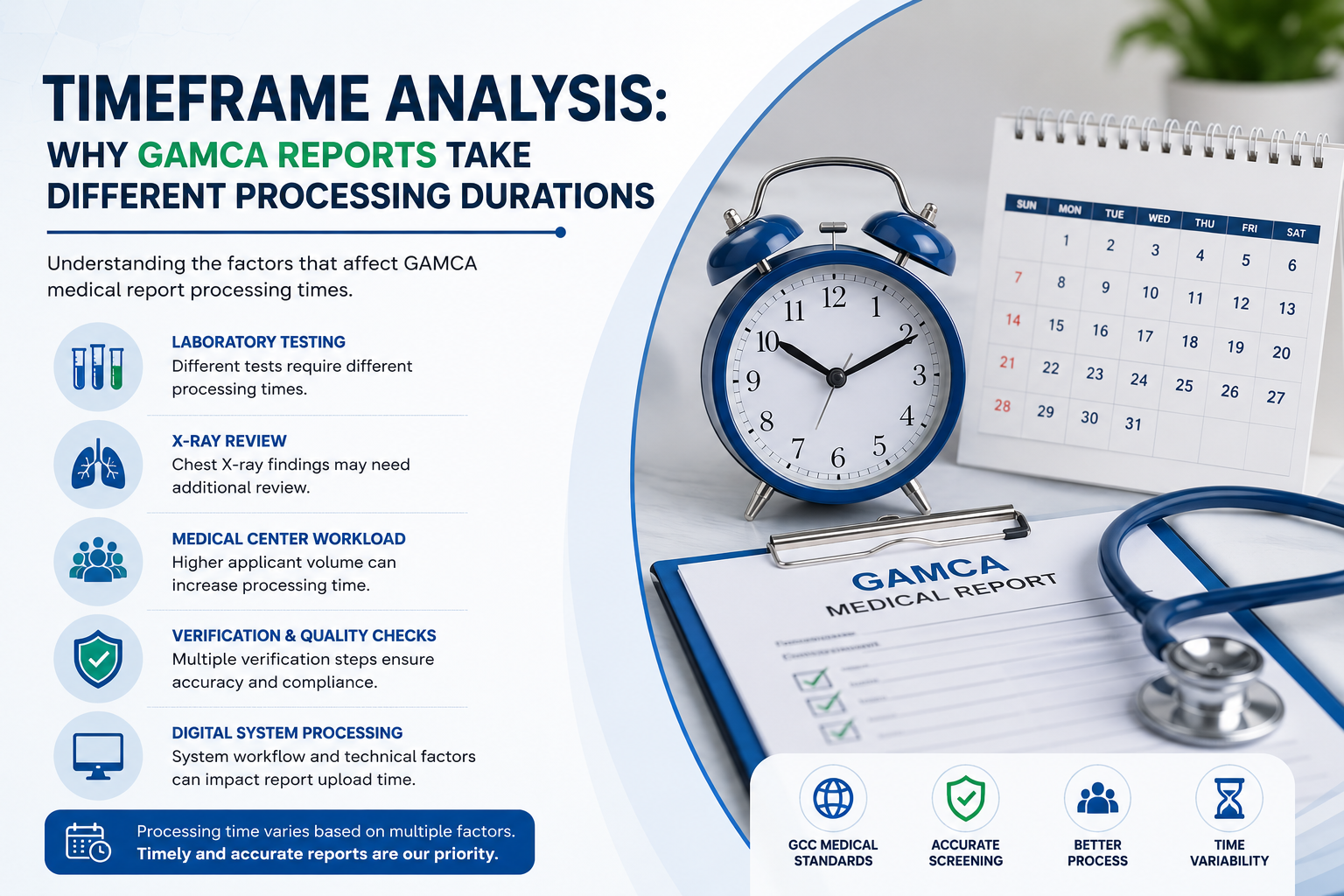
- Processing delays
Public Health Priorities Shape Policies
Each GCC country designs its screening criteria based on:
- Population density
- Labor market dependency
- Public health infrastructure
- Disease prevalence
Example:
- Saudi Arabia prioritises strict disease exclusion.
- UAE balances economic needs with health monitoring
Key Differences at a Glance
| TB Policy | Very strict | Moderate | Moderate | Moderate |
| HIV | Strict | Strict | Strict | Strict |
| Hepatitis | Restrictive | Flexible | Moderate | Mixed |
| Re-medical | Limited | Flexible | Moderate | Moderate |
| Job-based rules | Strict | Advanced | Moderate | Moderate |
Future Trends in GCC Infectious Disease Screening
The future of WAFID screening is evolving toward:
- AI-based disease detection
- Digital health records
- Risk-based screening models
- Integration with biometric systems
This could reduce inconsistencies and create more unified screening criteria across GCC.
Conclusion
Although Gamca has standardised the medical testing framework, infectious disease screening criteria still differ significantly across GCC countries. These differences are driven by national policies, job risk levels, and public health priorities.
For applicants, this means:
The same medical condition may lead to acceptance in one country and rejection in another.
The same medical condition may lead to acceptance in one country and rejection in another.
Understanding these variations is essential for:
- Choosing the right destination country
- Preparing for medical tests
- Avoiding unexpected visa rejections