For those seeking employment visas to Saudi Arabia, the Wafid medical examination is a required pre-departure health assessment. The Wafid medical procedure adheres to stringent, uniform standards established by Saudi health and immigration authorities, in contrast to regular health examinations. It is crucial for candidates to comprehend which medical exams have the highest failure rate and why, as the results of this examination directly affect their eligibility for a visa.
Purpose of High-Risk Medical Screening Under Wafid
Wafid medical examinations are designed to:
- Protect public health in Saudi Arabia.
- Prevent entry of communicable diseases.
- Ensure occupational fitness for foreign workers.
- Reduce long-term healthcare and workplace safety risks.
As a result, the focus is not on treatment or management, but on fitness and risk prevention. Certain medical tests, therefore, receive heightened scrutiny.
Blood Tests for Infectious Diseases
Why This Test Carries High Risk
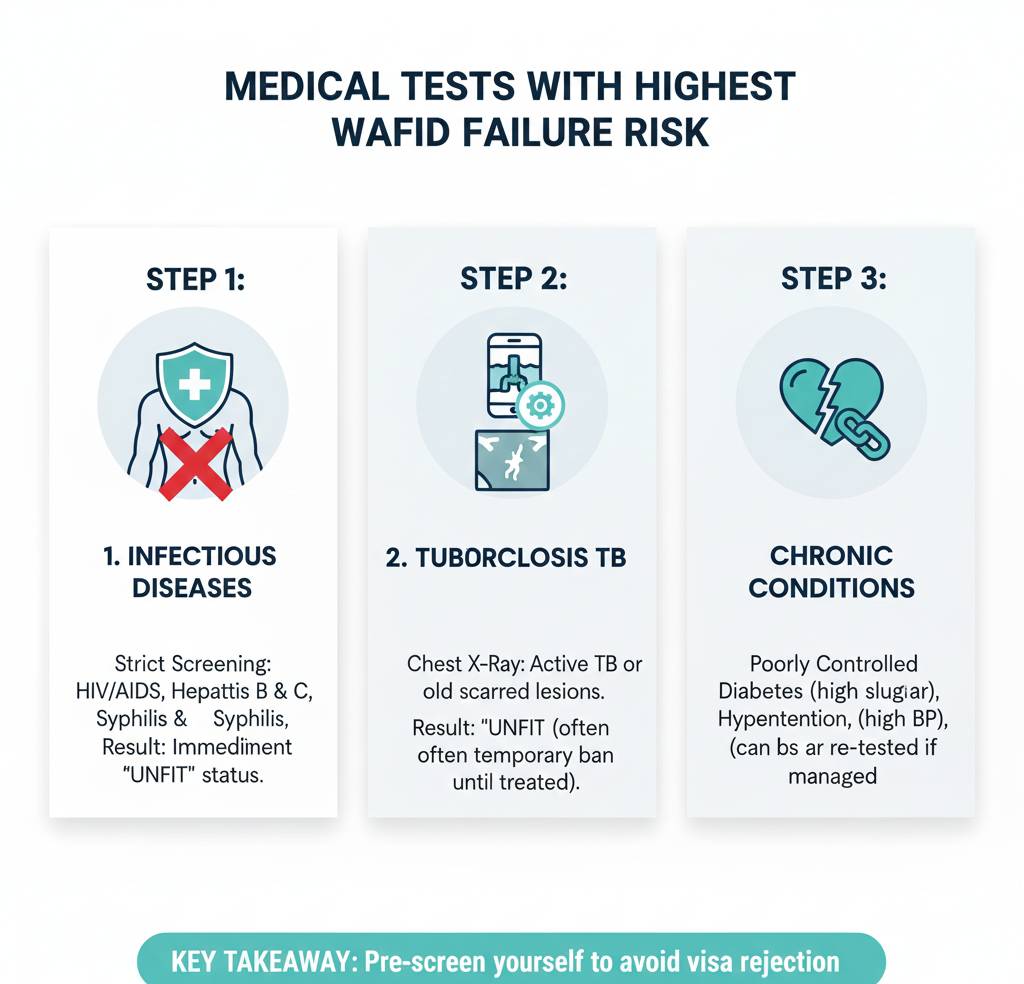
Blood screening for infectious diseases is one of the most critical components of the Wafid medical examination. Positive or reactive results often lead to immediate unfitness, regardless of symptom severity.
Conditions Commonly Screened
- HIV
- Hepatitis B
- Hepatitis C
- Syphilis
These conditions are considered high-risk due to their public health implications and long-term treatment requirements.
Key Insight
Even asymptomatic carriers or individuals with controlled viral loads may be declared unfit, as Wafid focuses on transmission risk, not current health stability.
Chest X-Ray for Tuberculosis (TB)
Why TB Screening Is Strict
Tuberculosis screening through chest X-ray is one of the most common reasons for Wafid’s medical failure. Saudi authorities apply strict standards due to TB’s airborne nature and potential for outbreaks.
Risk Factors That Trigger Failure
- Active TB indicators
- Old or healed TB scars (in some cases)
- Abnormal lung shadows require further evaluation.
Key Insight
Even past TB history can raise red flags if radiological findings are unclear or suspicious, leading to unfit or pending status.
Urine Test for Chronic Conditions and Substance Detection
Why This Test Matters
Urine analysis is used not only to detect infections but also to identify markers of chronic illness or prohibited substance use.
High-Risk Findings Include
- Uncontrolled diabetes indicators
- Kidney abnormalities
- Presence of narcotics or prohibited substances
Key Insight
Applicants may fail even if substance use was unintentional or linked to prescription medication not disclosed beforehand.
Physical Examination for Occupational Fitness
Why Job Role Matters
Wafid medical examinations assess job-specific physical fitness, meaning the same medical condition may be acceptable for one job but not another.
High-Risk Scenarios
- Musculoskeletal disorders for manual labor roles
- Severe vision or hearing impairment for drivers or machine operators
- Cardiac conditions for high-stress or physically demanding jobs
Key Insight
Mismatch between job title and physical capability is a common but overlooked reason for Wafid failure.
Vision and Hearing Tests
Why These Tests Are High Risk for Certain Jobs
Vision and hearing tests carry a significant risk for applicants applying for:
- Driving roles
- Heavy machinery operation
- Security or safety-sensitive positions
Common Reasons for Failure
- Vision below acceptable thresholds
- Color blindness (for specific job categories)
- Hearing loss affects safety communication.
Key Insight
Corrective aids such as glasses may not always be sufficient, depending on job regulations.
Blood Pressure and Cardiac Assessment
Why Controlled Conditions Can Still Be Risky
Although mild hypertension or controlled cardiac conditions may be manageable in daily life, Wafid applies strict fitness thresholds.
Risk Indicators
- Uncontrolled high blood pressure
- Irregular heart rhythms
- Evidence of cardiac stress or disease
Key Insight
Wafid evaluates long-term risk and workplace safety, not just present symptoms or medication control.
Mental Health and Neurological Screening
Why These Conditions Are Closely Monitored
Mental and neurological conditions are assessed based on:
- Safety implications
- Job reliability
- Risk of sudden impairment
Conditions That Raise Concern
- Epilepsy
- Severe psychiatric disorders
- History of hospitalization for mental illness
Key Insight
Disclosure and documentation matter; non-disclosure can result in permanent unfitness if discovered later.
Re-Test and Verification Triggers
Certain abnormal results may not lead to immediate failure, but can result in:
- Additional tests
- Specialist evaluation
- Extended “Pending” status
However, failure to clear follow-up tests usually leads to unfitness.
How Applicants Can Reduce the Risk of Wafid Failure
While outcomes depend on medical findings, applicants can reduce avoidable risks by:
- Disclosing a complete medical history honestly
- Avoiding prohibited medications or substances
- Managing chronic conditions under medical supervision
- Ensuring job title accuracy during registration
- Following pre-test instructions carefully
Preparation does not guarantee fitness, but it minimizes procedural and compliance-related failures.
Conclusion
Medical tests pertaining to respiratory health, occupational fitness, infectious disorders, and safety-sensitive conditions have the highest probability of Wafid failure. Public health, occupational safety, and long-term risk management are given precedence over individual treatment outcomes in Wafid medical evaluations.
Applicants can manage expectations, prepare appropriately, and approach the process with clarity and compliance by being aware of these high-risk exams. The first step to a more seamless visa process is awareness.